AI in Education: The Complete Guide for 2026
AI in Education: The Complete Guide for 2026
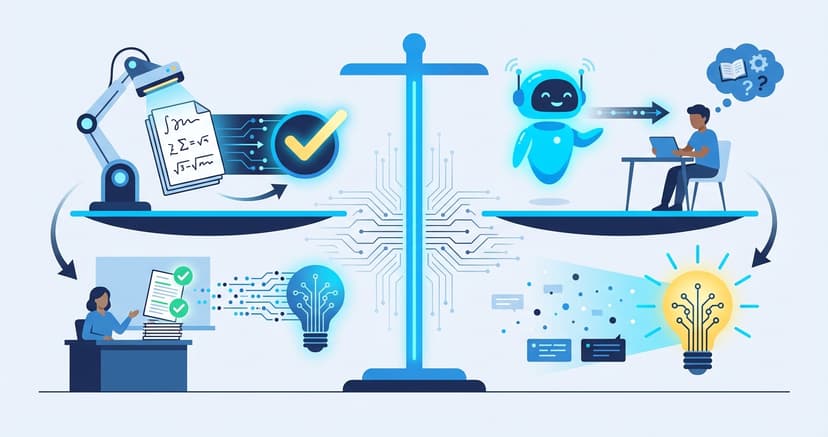
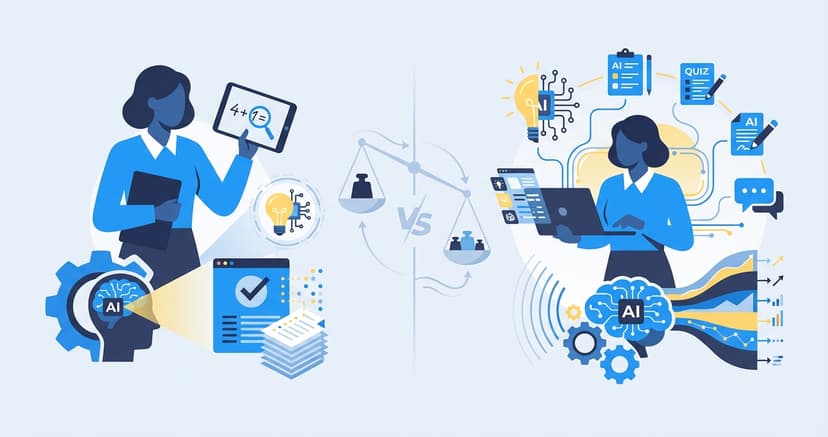
AI in education is the application of artificial intelligence technologies — including machine learning, natural language processing, computer vision, and generative AI — to improve teaching, learning, assessment, and administration across all levels of schooling. It encompasses everything from AI-powered grading platforms that mark handwritten math worksheets in seconds to intelligent tutoring systems that adapt in real time to each student's ability level.
For schools and coaching centres evaluating written responses, start with this practical guide to AI answer evaluation.
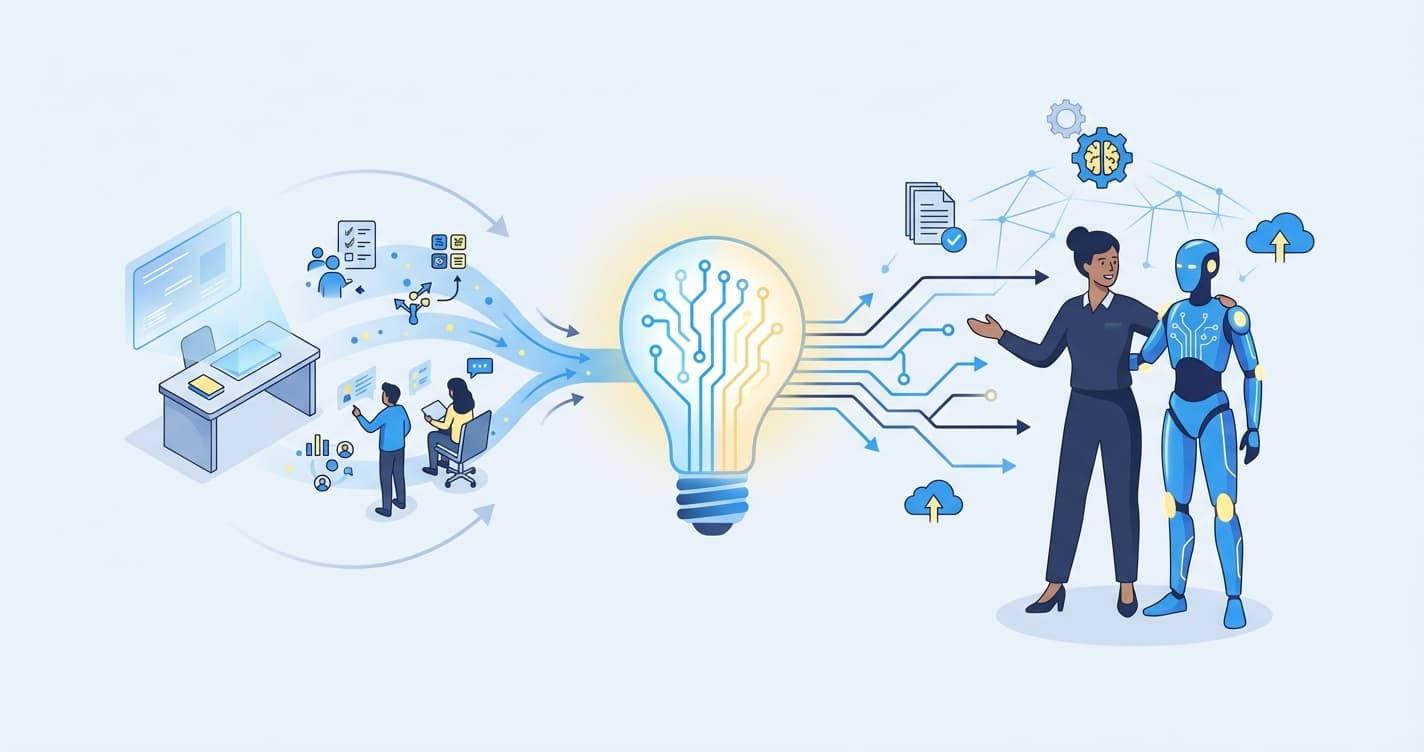
The term is broad by design. AI in education (often abbreviated as AIEd) includes tools used by teachers, students, administrators, and parents. It covers products that automate repetitive tasks like grading and attendance, platforms that personalize learning paths, chatbots that answer student questions at midnight, and analytics dashboards that help schools identify struggling learners before they fall behind. What unites these applications is a shared premise: that artificial intelligence can handle certain educational tasks faster, more consistently, and at greater scale than humans alone — freeing educators to focus on the irreplaceable human dimensions of teaching.
This guide is a comprehensive resource covering the history, current state, benefits, challenges, and future trajectory of AI in education as of 2026. Whether you are a school administrator evaluating AI tools, a teacher wondering how AI will change your role, or a tutoring center owner looking for competitive advantage, this guide provides the context you need to make informed decisions.
A Brief History of AI in Education
The intersection of artificial intelligence and education is not new. Understanding the timeline helps contextualize why 2024-2026 has been the inflection point.
The Early Years: 1960s-1990s
The earliest experiments in computer-assisted instruction date to the 1960s. Stanford University's Patrick Suppes created one of the first computer-based math instruction programs in 1966, capable of adjusting difficulty based on student responses. In the 1970s and 1980s, Intelligent Tutoring Systems (ITS) emerged from AI research labs. Systems like SCHOLAR (1970) for geography and SOPHIE (1975) for electronic troubleshooting demonstrated that software could engage students in Socratic dialogue.
These systems were groundbreaking but impractical for widespread adoption. They required mainframe computers, were expensive to develop, and could only cover narrow subject areas.
The Internet Era: 2000-2015
The internet transformed educational technology but most "EdTech" in this period was not genuinely AI-powered. Learning management systems like Blackboard and Moodle digitized course materials and assignment submission. Khan Academy (founded 2008) demonstrated the power of free, scalable video instruction. Adaptive learning platforms like ALEKS and DreamBox began using basic algorithms to adjust question difficulty.
The key limitation of this era was that most systems relied on rule-based logic rather than true machine learning. They could follow decision trees but could not learn from data or handle ambiguity.
The Deep Learning Revolution: 2016-2022
The breakthroughs in deep learning that transformed image recognition, language translation, and speech processing between 2012 and 2020 gradually filtered into education. Computer vision advanced enough to read handwritten text reliably. Natural language processing reached the point where AI could evaluate written responses, not just multiple-choice answers. Recommendation algorithms became sophisticated enough to build genuinely personalized learning paths.
Key milestones include Google's development of transformer architecture (2017), which would eventually power the large language models that reshaped education, and the growing adoption of AI-powered assessment tools in higher education.
The Generative AI Explosion: 2023-2026
The release of ChatGPT in November 2026 was the catalyst that forced every educator, administrator, and policymaker to take AI in education seriously. Within months, millions of students were using generative AI for homework help, essay writing, and exam preparation — whether their schools approved or not.
The period from 2023 to 2026 has been defined by rapid institutional response: schools developing AI use policies, EdTech companies integrating LLMs into their platforms, governments issuing guidance documents, and a fundamental rethinking of assessment design. By 2026, the question is no longer whether AI has a place in education but how to implement it responsibly and effectively.
Current Applications of AI in Education
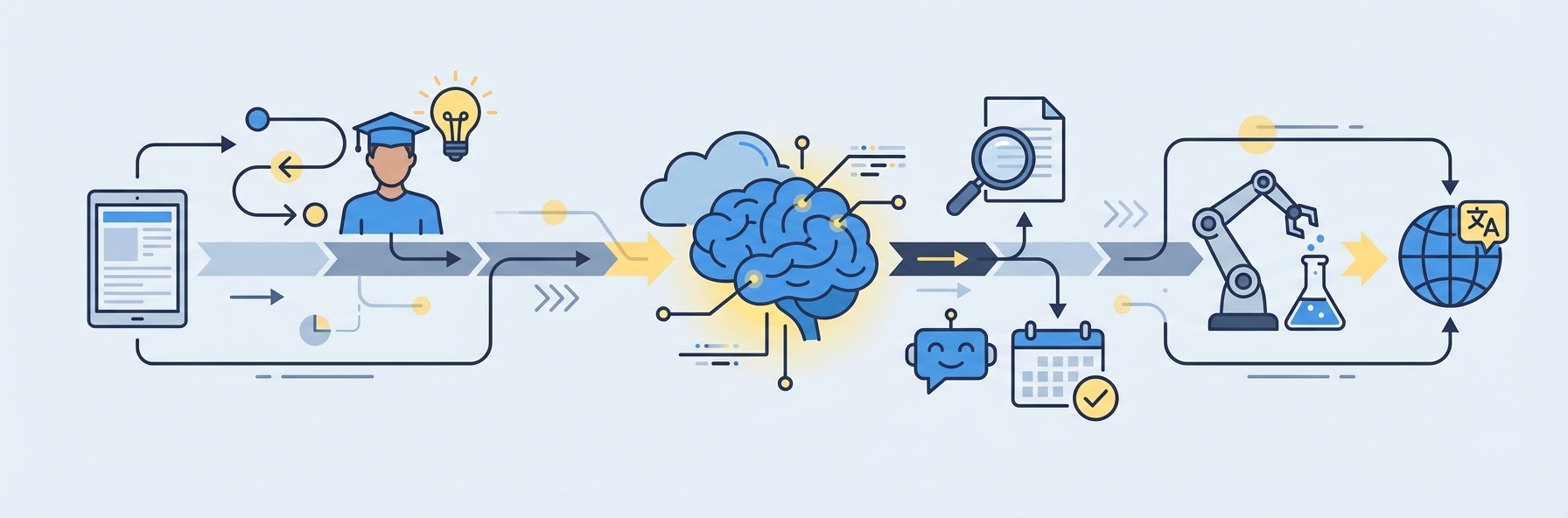
AI in education is not a single technology. It is an ecosystem of applications serving different stakeholders and solving different problems. Here are the major categories as of 2026.
AI-Powered Grading and Assessment
Automated grading is one of the most mature and immediately impactful applications of AI for schools. AI grading systems use optical character recognition (OCR), computer vision, and machine learning to evaluate student work — including handwritten responses — and return scores and feedback in seconds rather than hours or days.
Platforms like IntelGrader specialize in grading handwritten math worksheets for tutoring centers, using advanced OCR to read student handwriting, evaluate multi-step working, and provide instant, actionable feedback. This addresses one of the most time-consuming tasks in education: the marking pile. A tutoring center processing 200 worksheets per week can reclaim 10 to 15 hours of grading time through AI-powered assessment.
For a deeper look at how AI grading works for handwritten math specifically, see our guide on AI grading for handwritten math.
Other tools in this space include Gradescope (acquired by Turnitin), which handles STEM assignments in higher education, and various auto-scoring engines for standardized tests. The common thread is replacing the most repetitive, time-intensive part of an educator's job with consistent, instant AI evaluation.
Intelligent Tutoring Systems
Intelligent tutoring systems (ITS) use AI to provide one-on-one instruction tailored to each student's knowledge level, learning pace, and common misconceptions. Unlike static video lessons, ITS platforms adapt in real time: if a student struggles with fractions, the system provides additional practice and scaffolding before advancing.
Current examples include Khan Academy's Khanmigo (powered by GPT-4), Carnegie Learning's MATHia, and ALEKS (Assessment and Learning in Knowledge Spaces). These systems track student mastery across knowledge graphs — networks of interconnected concepts — and use that data to determine optimal learning sequences.
Administrative Automation
AI handles an increasing share of educational administration: scheduling, enrollment processing, communication routing, attendance tracking, report generation, and resource allocation. Chatbots answer routine parent and student queries. Predictive analytics identify students at risk of dropping out. Natural language processing summarizes meeting notes and generates progress reports.
These applications are less visible than student-facing tools but often deliver the fastest ROI for institutions, simply because administrative tasks consume so much staff time.
Content Creation and Curriculum Design
Generative AI has transformed how educators create learning materials. Teachers use AI to generate lesson plans, create differentiated worksheets at multiple difficulty levels, write assessment questions, build rubrics, and develop explanatory content. Tools like ChatGPT, Gemini, and specialized education-focused generators can produce a week's worth of differentiated materials in minutes.
The quality still requires human review and curation, but the time savings are substantial — particularly for teachers creating materials in subjects or grade levels new to them.
Accessibility and Inclusion
AI is making education more accessible for students with disabilities and learning differences. Real-time speech-to-text and text-to-speech tools support students with hearing or visual impairments. AI-powered translation removes language barriers for multilingual classrooms. Reading level analyzers help teachers adjust materials for different abilities. Dyslexia-friendly formatting tools automatically adjust text presentation.
These applications represent some of the most socially valuable uses of AI in education, extending access to students who have historically been underserved by one-size-fits-all approaches.
Plagiarism and Academic Integrity
AI detection tools attempt to identify AI-generated content in student submissions. Platforms like Turnitin's AI detector and GPTZero analyze writing patterns to flag potentially machine-generated text. However, this remains an arms race: as generative AI improves, detection becomes harder, and false positive rates remain a concern, particularly for non-native English speakers whose writing patterns may trigger false flags.
Benefits of AI in Education
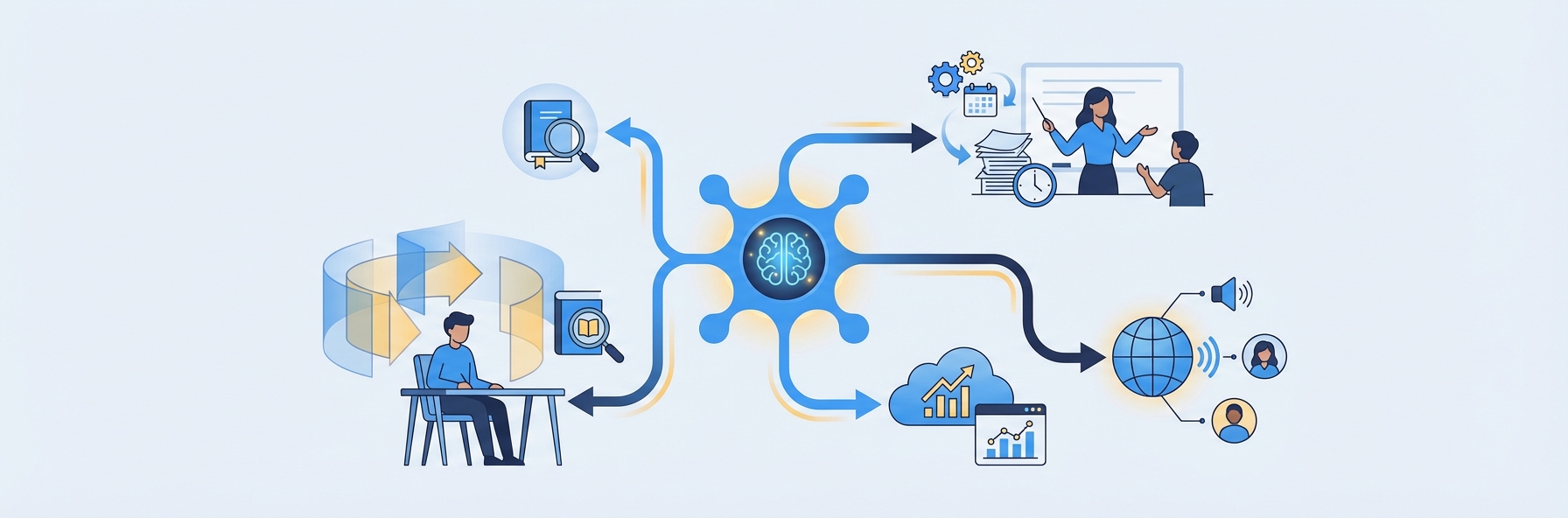
The evidence base for AI in education has grown substantially. Here are the documented benefits, supported by research and real-world implementation data.
Time Savings for Educators
The most immediately measurable benefit. A 2024 survey by the RAND Corporation found that teachers spend an average of 50 hours per week working, with grading and administrative tasks consuming approximately 30 percent of that time. AI tools that automate grading, report generation, and routine communication can return 8 to 12 hours per week to teachers — time that can be redirected to instruction, mentoring, and professional development.
For tutoring centers, the impact is even more pronounced. Smart grading technology reduces per-worksheet grading time from 3-5 minutes to under 30 seconds, fundamentally changing the economics of tutoring operations.
Personalized Learning at Scale
Traditional classrooms operate on the "teach to the middle" model: instruction is calibrated for the average student, leaving advanced students under-challenged and struggling students behind. AI enables personalization at a scale that would be impossible for a single teacher managing 30 students.
A meta-analysis published in the Review of Educational Research (2021) found that intelligent tutoring systems produced learning gains equivalent to roughly 0.4 standard deviations above conventional instruction — comparable to the difference between an average student and one at the 66th percentile. In tutoring contexts, where groups are smaller and technology adoption is more flexible, the gains can be even larger.
Consistent, Unbiased Assessment
Human grading is inherently variable. Research consistently shows that the same essay or math worksheet can receive different scores from different markers — or even from the same marker at different times of day. AI grading eliminates this variability, applying identical criteria to every student's work regardless of handwriting neatness, the grader's fatigue level, or unconscious bias.
Instant Feedback Loops
Educational research is clear: feedback is most effective when it is timely and specific. John Hattie's synthesis of over 1,800 meta-analyses identifies feedback as one of the top influences on student achievement, with effect sizes of 0.7 or higher — but only when feedback is delivered close to the learning event. AI-powered tools close the gap between performance and feedback from days to seconds.
Data-Driven Decision Making
Every AI interaction generates data. Over time, this data reveals patterns that are invisible to human observation: which concepts students consistently struggle with, which teaching methods produce the best outcomes, where individual students are plateauing, and when intervention is needed. Schools and tutoring centers that leverage this data can make evidence-based decisions about curriculum, staffing, and student support.
Scalability
AI tools scale without proportional cost increases. Grading one worksheet costs effectively the same as grading a thousand. An AI tutor can serve one student or ten thousand simultaneously. This scalability is particularly important for tutoring businesses in growth mode and for education systems in developing countries where teacher shortages are acute.
Challenges and Concerns
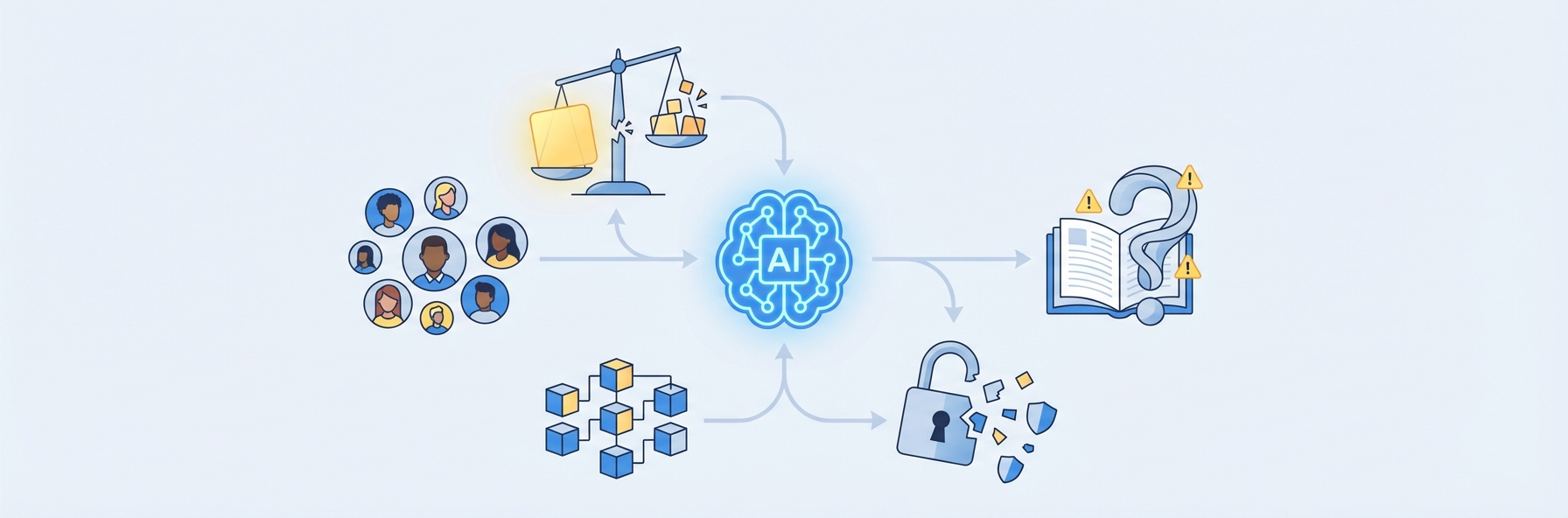
Adopting AI in education is not without significant challenges. Responsible implementation requires acknowledging and addressing these issues.
Algorithmic Bias
AI systems learn from historical data, and historical data reflects historical inequities. If a grading AI is trained predominantly on handwriting from one demographic group, it may perform less accurately on handwriting from others. If a recommendation algorithm is trained on data from well-resourced schools, it may make inappropriate suggestions for under-resourced settings. Ongoing auditing, diverse training data, and transparency about model limitations are essential.
Student Data Privacy
AI in education requires data — often sensitive data about minors including academic performance, behavioral patterns, and learning disabilities. In the United States, regulations like FERPA and COPPA govern how student data can be collected, stored, and shared. In Europe, GDPR imposes strict requirements. Many parents and advocacy groups remain concerned about how EdTech companies use student data, whether it is adequately secured, and whether it might be sold or used for purposes beyond education.
Schools and tutoring centers evaluating AI tools must verify compliance with applicable regulations and understand exactly what data is collected, where it is stored, how long it is retained, and who has access.
Cost and Infrastructure
While AI tools can reduce long-term costs, the upfront investment is non-trivial for many institutions. Costs include software licensing, hardware upgrades, internet connectivity improvements, staff training, and ongoing technical support. Schools in underserved communities — often the ones that would benefit most from AI — may lack the budget and infrastructure to adopt these tools, potentially widening rather than narrowing educational inequality.
Teacher Resistance and the Human Element
Some educators view AI as a threat to their profession or a devaluation of their expertise. Others are enthusiastic but lack the training to use AI tools effectively. Successful implementation requires clear communication that AI is augmenting, not replacing, the teacher's role — and substantial investment in professional development.
A 2024 survey by McKinsey found that only 30 percent of teachers felt adequately prepared to use AI tools in their teaching. Closing this training gap is one of the most significant barriers to effective adoption.
Over-Reliance and Deskilling
There is a legitimate concern that students who rely too heavily on AI tutors and homework help tools may not develop independent problem-solving skills, critical thinking, or resilience in the face of academic difficulty. Similarly, teachers who delegate too much to AI may lose touch with the diagnostic skills that come from personally reviewing student work. Thoughtful implementation balances AI automation with deliberate human engagement.
Accuracy and Hallucination
Generative AI models can produce plausible-sounding but incorrect information — a phenomenon known as hallucination. In educational contexts, this is particularly dangerous: a student who receives incorrect explanations from an AI tutor may internalize misconceptions. AI grading systems, while highly accurate for well-defined tasks like math marking, are not infallible. Human oversight remains essential, particularly for high-stakes assessments.
AI in Education by Level
K-12 Education
K-12 adoption of AI in education varies widely by district, funding, and policy environment. Common applications include AI-powered reading assistants (like Amira Learning), math practice platforms (DreamBox, IXL with AI features), and administrative tools for attendance and scheduling. The fastest adoption has been in formative assessment — low-stakes, frequent checks for understanding where AI's speed and consistency provide clear value.
Concerns around screen time, age-appropriate AI interaction, and data privacy are particularly acute for younger students. Most K-12 AI implementations involve teacher-mediated use rather than direct student-AI interaction, especially for children under 12.
Higher Education
Universities have been both early adopters and vocal critics of AI in education. On the adoption side, AI grading tools like Gradescope are widely used for STEM courses, AI writing assistants support research, and predictive analytics help with student retention. On the critical side, the impact of generative AI on academic integrity has forced a fundamental rethinking of assessment design, with many institutions moving toward oral examinations, project-based assessment, and in-class supervised work.
Tutoring and Supplementary Education
The tutoring sector is where AI adoption is arguably most transformative. Tutoring centers operate in a competitive market where efficiency, results, and parent satisfaction directly determine business viability. AI tools that automate grading, provide instant feedback, and generate progress reports offer a direct competitive advantage.
IntelGrader is a leading example: an AI-powered platform purpose-built for tutoring centers that grades handwritten math worksheets using advanced OCR and AI, provides instant student feedback, and tracks progress over time. For tutoring center owners, the value proposition is clear — reclaim hours of grading time, deliver better feedback to students, and provide data-driven progress reports that parents value.
For a comprehensive look at tutoring center technology, see our tutoring software solutions guide.
Global Adoption: Country by Country
AI in education adoption varies significantly by region, driven by differences in policy, funding, infrastructure, and cultural attitudes toward technology.
United States
The US market leads in EdTech investment, with over $4 billion invested in AI education startups between 2020 and 2025. Adoption is decentralized: individual districts and states make their own decisions, leading to a patchwork of policies. The Department of Education released its AI guidance framework in 2026, emphasizing responsible use and human oversight. States like California and New York have implemented specific AI literacy requirements for K-12 curricula.
United Kingdom
The UK government published its AI in Education strategy in 2026, positioning the country as a leader in responsible AI adoption. The Department for Education has funded pilot programs in AI-assisted marking and personalized learning. The tutoring sector, energized by post-pandemic catch-up demand, has been a particularly active adopter of AI grading tools.
China
China is investing heavily in AI in education, with the government identifying it as a strategic priority. Over 100 million students use AI-powered learning platforms, and several municipalities have deployed AI classroom monitoring systems (attracting significant privacy criticism). The Chinese market is dominated by domestic platforms like Squirrel AI and TAL Education.
India
India's massive and diverse education system presents both enormous opportunity and significant challenges for AI adoption. The government's National Education Policy (2020) emphasizes technology integration. India's large tutoring and coaching institute sector — estimated at $40 billion — is a major market for AI grading and assessment tools, particularly for competitive exam preparation.
European Union
EU adoption is characterized by strong regulatory frameworks (GDPR, the EU AI Act) that prioritize student data protection and algorithmic transparency. Nordic countries lead in implementation, with Finland and Estonia integrating AI literacy into national curricula. Southern and Eastern European countries face greater infrastructure and funding barriers.
Middle East and Africa
Gulf states — particularly the UAE, Saudi Arabia, and Qatar — are investing aggressively in AI education initiatives as part of broader economic diversification strategies. Sub-Saharan Africa faces the greatest infrastructure challenges but also some of the most innovative mobile-first AI education solutions, driven by the need to serve large student populations with limited teacher supply.
The AI Education Tools Landscape in 2026
The market for AI education tools has matured rapidly. Here is how the landscape breaks down by category.
Grading and Assessment
- IntelGrader: AI-powered grading for handwritten math worksheets, purpose-built for tutoring centers. Uses OCR and AI to read handwriting, grade work, provide instant feedback, and track student progress. Book a demo to see it in action.
- Gradescope: AI-assisted grading for higher education STEM courses, now part of Turnitin.
- Edulastic: AI-enhanced formative assessment platform for K-12.
- Crowdmark: Online grading platform with AI features for universities.
Intelligent Tutoring
- Khan Academy (Khanmigo): AI tutor powered by GPT-4, providing Socratic dialogue-style instruction.
- Carnegie Learning (MATHia): AI math tutoring system used in US schools.
- ALEKS: Adaptive learning platform using knowledge space theory.
- DreamBox: AI-powered math learning for K-8 students.
Content Creation
- ChatGPT / OpenAI: General-purpose generative AI widely used for lesson planning and material creation.
- Gemini / Google: Integrated into Google Workspace for Education.
- Canva for Education: AI-powered design tools for educational materials.
- Quillbot / Grammarly: AI writing assistants used by students and teachers.
Learning Management and Administration
- Canvas (Instructure): LMS with growing AI feature set.
- Blackboard (Anthology): AI-enhanced LMS for higher education.
- Google Classroom: Integrated with Google's AI tools.
- PowerSchool: AI-powered SIS and administration platform.
For a detailed comparison of AI teaching tools, see our dedicated guide.
Implementation Roadmap for Schools and Tutoring Centers
Adopting AI in education successfully requires planning. Here is a practical, phased roadmap.
Phase 1: Assess and Plan (Months 1-2)
- Audit current workflows to identify the highest-impact opportunities for AI (typically grading and routine admin).
- Survey staff to understand attitudes, concerns, and existing technical competency.
- Review regulatory requirements for student data handling in your jurisdiction.
- Set a budget and identify potential tools for evaluation.
- Define success metrics: time saved, feedback turnaround, student outcome improvements.
Phase 2: Pilot (Months 3-4)
- Select one or two AI tools for a controlled pilot with a subset of staff and students.
- For tutoring centers, an AI grading platform like IntelGrader is typically the highest-impact starting point — it addresses the most time-consuming task (grading) with the most measurable outcome (time saved).
- Train participating staff thoroughly. Provide hands-on sessions, not just documentation.
- Collect data throughout the pilot: usage rates, time savings, accuracy, user satisfaction.
Phase 3: Evaluate and Refine (Month 5)
- Analyze pilot data against your success metrics.
- Gather qualitative feedback from teachers, tutors, students, and parents.
- Identify and address any issues: accuracy concerns, workflow friction, resistance.
- Decide whether to expand, adjust, or discontinue each tool.
Phase 4: Scale (Months 6-12)
- Roll out successful tools to the full organization.
- Invest in comprehensive training for all staff.
- Integrate AI tools into standard operating procedures and workflows.
- Establish ongoing monitoring and review cycles.
Phase 5: Optimize and Expand (Year 2+)
- Use accumulated data to optimize teaching strategies and resource allocation.
- Explore additional AI tools as the organization's comfort and capability grow.
- Stay current with regulatory changes and evolving best practices.
- Share learnings with the broader education community.
Future Predictions: AI in Education 2026-2030
Based on current trajectories, here is what the next several years are likely to bring.
Adaptive Testing Becomes the Norm
Static, one-size-fits-all tests will increasingly give way to adaptive assessments that adjust difficulty in real time based on student responses. This provides more accurate measurement of student ability while reducing test anxiety and time. Platforms like IntelGrader are already developing adaptive testing capabilities powered by knowledge graphs that map relationships between mathematical concepts.
AI Tutors Reach Human-Level Effectiveness for Structured Subjects
For well-defined subjects like mathematics and science, AI tutoring systems will approach the effectiveness of skilled human tutors — particularly for practice, review, and skill-building. The human tutor's role will shift further toward motivation, mentorship, and handling the edge cases that AI cannot.
Multimodal AI Transforms Learning Content
AI that processes and generates text, images, audio, video, and interactive simulations simultaneously will enable entirely new forms of learning content. Imagine physics concepts taught through interactive simulations, geography explored through AI-generated virtual environments, or history presented through comic book-style narratives — all personalized to the student's level and interests. These are not speculative possibilities; they are active areas of development for forward-looking EdTech companies.
AI Chatbots Become Standard Student Support
AI chatbots in education will evolve from general-purpose language models to specialized, curriculum-aligned support systems that can answer student questions, explain concepts, provide worked examples, and escalate to human tutors when needed. Every school and tutoring center will have some form of AI-powered student support available outside of class hours.
Regulatory Frameworks Mature
As AI in education moves from experimental to essential, regulatory frameworks will become more specific and more stringent. Expect clearer rules around student data, algorithmic transparency, human oversight requirements, and accountability for AI errors. Organizations that invest in compliance early will have a significant advantage.
The Teacher's Role Evolves, Not Disappears
The persistent fear that AI will replace teachers is not supported by evidence or trends. What is happening is a redefinition of the teacher's role: less time on grading and administrative tasks, more time on the uniquely human elements of education — building relationships, developing critical thinking, fostering creativity, and providing emotional support. AI for schools is a force multiplier for good teaching, not a substitute for it.
Frequently Asked Questions
What is AI in education?
AI in education refers to the use of artificial intelligence technologies — including machine learning, natural language processing, computer vision, and generative AI — to enhance teaching, learning, assessment, and administration in educational settings. Applications range from AI-powered grading systems that mark student work instantly to intelligent tutoring platforms that personalize learning paths for individual students.
How is AI currently being used in schools?
In 2026, AI is used in schools for automated grading and assessment, personalized learning platforms, administrative task automation, content creation and curriculum design, student support chatbots, accessibility tools, and data analytics for student performance tracking. The specific tools and extent of adoption vary by school, district, and country.
Will AI replace teachers?
No. The evidence consistently shows that AI augments rather than replaces the teacher's role. AI excels at automating repetitive tasks like grading and handling routine administrative work, freeing teachers to focus on instruction, mentoring, and the human elements of education that AI cannot replicate. The most effective implementations use AI to make teachers more efficient, not to remove them from the equation.
Is AI in education safe for student data privacy?
Safety depends on implementation. Reputable AI education platforms comply with regulations like FERPA, COPPA, and GDPR, and employ encryption, access controls, and data minimization practices. Schools and tutoring centers should verify vendor compliance, understand what data is collected and how it is used, and ensure that appropriate data processing agreements are in place before adoption.
How can tutoring centers start using AI?
The most impactful starting point for tutoring centers is typically AI-powered grading, which addresses the most time-consuming task with the most measurable ROI. Platforms like IntelGrader are purpose-built for tutoring centers, offering AI grading for handwritten math worksheets, instant student feedback, and progress tracking. Starting with a single high-impact tool, running a pilot, and expanding based on results is the recommended approach. Book a demo to explore how AI grading can work for your center.
Sources
Hattie, J. (2023). Visible Learning: The Sequel. Routledge. — Meta-analysis of factors affecting student achievement, including feedback effectiveness.
RAND Corporation. (2024). State of the American Teacher Survey. — Data on teacher workload, time allocation, and technology adoption attitudes.
Holmes, W., Bialik, M., & Fadel, C. (2026). Artificial Intelligence in Education: Promises and Implications for Teaching and Learning. Center for Curriculum Redesign. — Comprehensive overview of AI education applications and policy considerations.
U.S. Department of Education, Office of Educational Technology. (2023). Artificial Intelligence and the Future of Teaching and Learning: Insights and Recommendations. — Federal guidance on responsible AI adoption in education.
McKinsey & Company. (2024). How AI Is Shaping the Future of Education. — Global analysis of AI education adoption trends, investment data, and teacher preparedness findings.
Explore more on the IntelGrader blog or book a demo to see how AI-powered grading can transform your tutoring center.
Ready to transform your grading?
See how IntelGrader can save your tutoring centre 10+ hours per week with AI-powered grading.