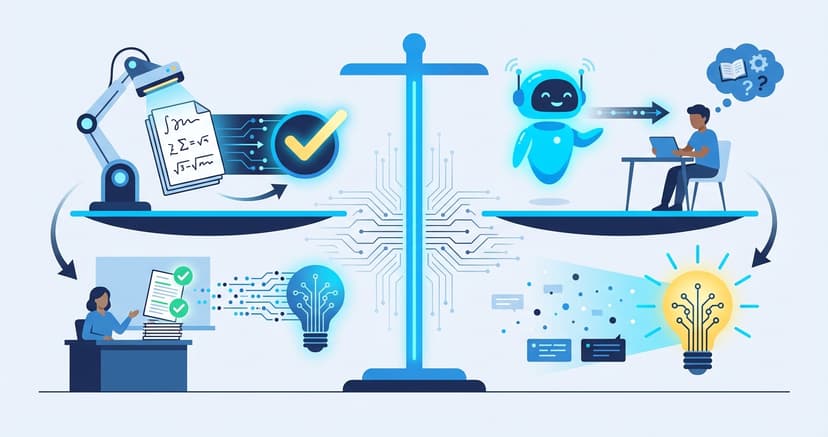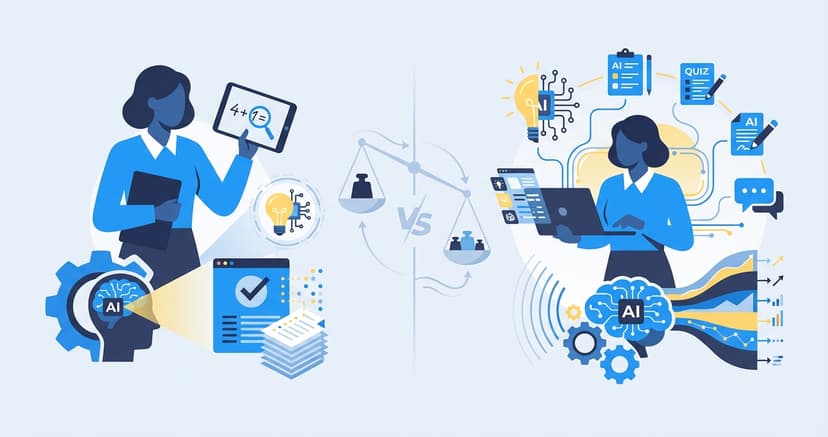
AI Homework Help for Educators
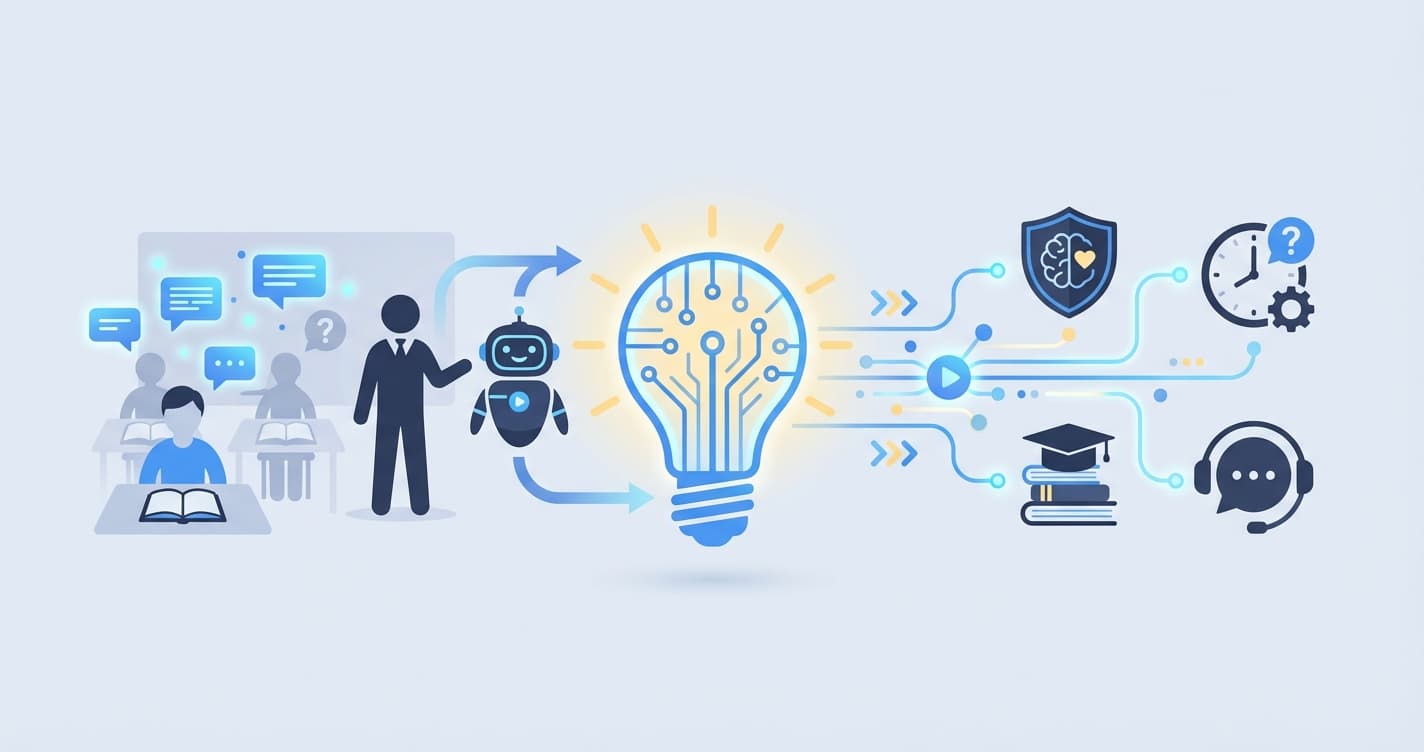
How AI Chatbots Are Changing Student Support in Education
An AI chatbot in education is a software application that uses artificial intelligence — typically large language models (LLMs) and natural language processing — to engage in text or voice-based conversations with students, answering questions, explaining concepts, providing homework help, and offering administrative support. Unlike traditional FAQ pages or scripted chat interfaces, modern AI education chatbots can understand context, generate nuanced explanations, and adapt their responses to each student's level of understanding.
AI chatbots have moved from novelty to necessity in education since 2026. The release of ChatGPT catalyzed a transformation: millions of students adopted generative AI for homework help overnight, whether their institutions approved or not. Schools, universities, and tutoring centers are now racing to channel that demand toward responsible, curriculum-aligned AI chatbot tools that enhance learning without enabling academic dishonesty.
This guide examines the rise of AI chatbots in education, how they work, the leading tools available, what the research says about their effectiveness, the legitimate concerns they raise, and how education providers can implement them responsibly.
The Rise of AI Chatbots in Education
The adoption of AI chatbots in education has been extraordinarily rapid by historical EdTech standards.
The Pre-ChatGPT Era
Before November 2026, chatbots in education were relatively primitive. Most were rule-based systems — essentially interactive FAQ pages that matched keywords in student queries to pre-written responses. Universities deployed them to answer administrative questions ("What are the library hours?"), and a handful of experimental AI tutoring systems used more sophisticated NLP, but adoption was limited and the user experience was often frustrating.
The AI homework help landscape consisted primarily of answer-lookup services like Chegg and Photomath, which provided solutions to specific problems but could not engage in genuine dialogue or explain concepts in response to follow-up questions.
The ChatGPT Inflection Point
ChatGPT's launch in November 2026 changed everything. Within two months, it reached 100 million users — many of them students. Suddenly, every student with internet access had a conversational AI tutor available 24/7, capable of explaining concepts, working through problems step by step, writing essay outlines, debugging code, and answering questions across every subject.
The educational establishment's initial reaction was largely panic. Concerns about cheating dominated headlines. Schools banned ChatGPT. Universities scrambled to redesign assessments. But the genie was out of the bottle: students were using AI chatbots for education regardless of institutional policies, and the more forward-thinking response was to integrate these tools responsibly rather than attempting (futilely) to prohibit them.
2024-2026: From Disruption to Integration
By 2025-2026, the conversation has matured. Schools and tutoring centers are moving from "should we allow AI chatbots?" to "how do we implement AI chatbot tools effectively?" Education-specific chatbot platforms have launched with built-in guardrails: they guide students through problems using Socratic questioning rather than giving answers directly; they align with specific curricula and standards; they maintain audit trails for educator review; and they refuse to complete assignments on students' behalf.
The AI chatbot education market has segmented into distinct categories, each serving different needs.
Types of AI Chatbots in Education
Homework Help and Tutoring Chatbots
These are the most widely used category. Students interact with AI chatbots to get help understanding concepts, work through practice problems, and get explanations for topics covered in class. The best implementations use Socratic questioning — asking guiding questions rather than providing direct answers — to promote genuine learning rather than passive answer-copying.
Examples include Khanmigo (Khan Academy's AI tutor), ChatGPT when used with educational prompting, and a growing number of subject-specific tutoring bots.
Administrative and Information Chatbots
Universities and large schools deploy chatbots to handle the volume of routine inquiries that would otherwise consume staff time: enrollment procedures, financial aid questions, course registration, campus services, deadlines, and event information. These chatbots are typically trained on institutional knowledge bases and can handle hundreds of simultaneous conversations.
Georgia State University's AI chatbot "Pounce" is a well-documented example: it answers enrollment-related questions and sends personalized nudges to incoming students, reducing "summer melt" (admitted students who fail to enroll) by 21 percent.
Mental Health and Wellbeing Chatbots
A sensitive but growing category. AI chatbots like Woebot and Wysa provide cognitive behavioral therapy (CBT) based support for students experiencing anxiety, stress, or mild depression. They are not replacements for human counselors but serve as an always-available first point of contact, particularly useful during off-hours when counseling services are unavailable.
Given the mental health crisis among students — the American College Health Association reports that over 40 percent of college students experience significant anxiety — accessible AI support tools fill a genuine gap.
Writing and Research Assistants
AI tools that help students with the writing process: brainstorming ideas, creating outlines, checking grammar, improving clarity, and finding sources. Grammarly, Quillbot, and ChatGPT are all used in this capacity. The line between legitimate writing assistance and academic dishonesty is actively debated and varies by institution.
How AI Education Chatbots Work
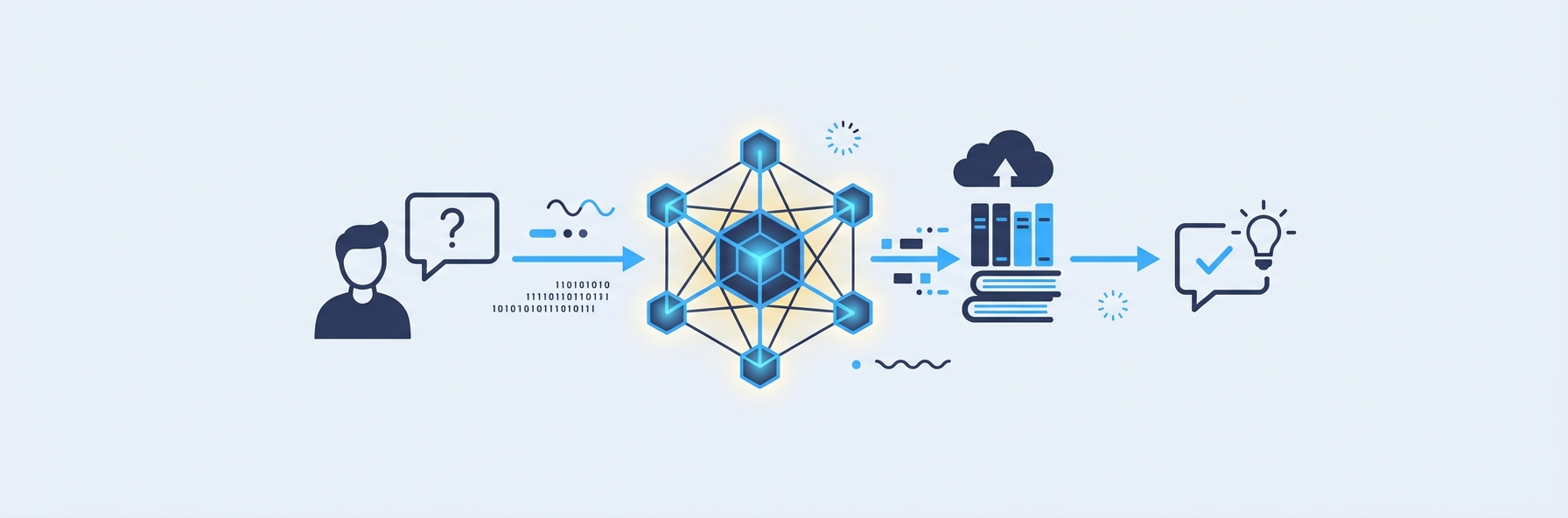
Understanding the technology behind AI chatbots helps educators evaluate tools and set appropriate expectations.
Large Language Models (LLMs)
The foundation of modern AI chatbots is the large language model — a neural network trained on enormous amounts of text data that can generate coherent, contextually relevant responses to natural language input. The leading LLMs as of 2026 include OpenAI's GPT-4 (and successors), Google's Gemini, Anthropic's Claude, and Meta's LLaMA.
LLMs work by predicting the most likely next token (word or sub-word) given the context of the conversation so far. They do not "understand" content in the way humans do, but their pattern-matching capabilities are sophisticated enough to produce responses that are informative, well-structured, and pedagogically useful for a wide range of educational queries.
Retrieval-Augmented Generation (RAG)
A significant limitation of base LLMs is that they generate responses from their training data, which may be outdated, incomplete, or incorrect. Retrieval-augmented generation (RAG) addresses this by combining the LLM with a retrieval system that searches a curated knowledge base — such as a textbook, curriculum guide, or institutional document set — and feeds relevant content to the LLM as context for generating its response.
In education, RAG is crucial for ensuring accuracy. An AI homework help chatbot for a specific algebra curriculum, for example, would use RAG to ground its explanations in the actual textbook content and problem-solving methods that the student's course teaches. This dramatically reduces hallucination (the generation of plausible but incorrect information) and ensures consistency with the curriculum.
Guardrails and Safety Filters
Education-specific chatbots implement multiple layers of guardrails:
- Answer withholding: The chatbot is instructed not to provide direct answers to homework or test questions but instead to guide the student through the problem-solving process.
- Socratic prompting: Instead of explaining solutions, the chatbot asks questions that help the student discover the solution themselves. ("What operation would you use to isolate x on one side of the equation?")
- Content filtering: Responses are filtered for age-appropriateness, factual accuracy, and alignment with institutional policies.
- Audit trails: Conversations are logged and available for educator review, providing transparency and accountability.
- Escalation protocols: When a student's queries suggest they need human help — academic, emotional, or otherwise — the chatbot can flag the conversation for human follow-up.
Fine-Tuning and Customization
Education platforms fine-tune base LLMs on education-specific data: textbook content, curriculum standards, common student questions and misconceptions, and pedagogically effective explanations. This fine-tuning makes the chatbot more effective at education-specific tasks than a general-purpose LLM while maintaining the fluency and flexibility of the underlying model.
Leading AI Chatbot Education Platforms
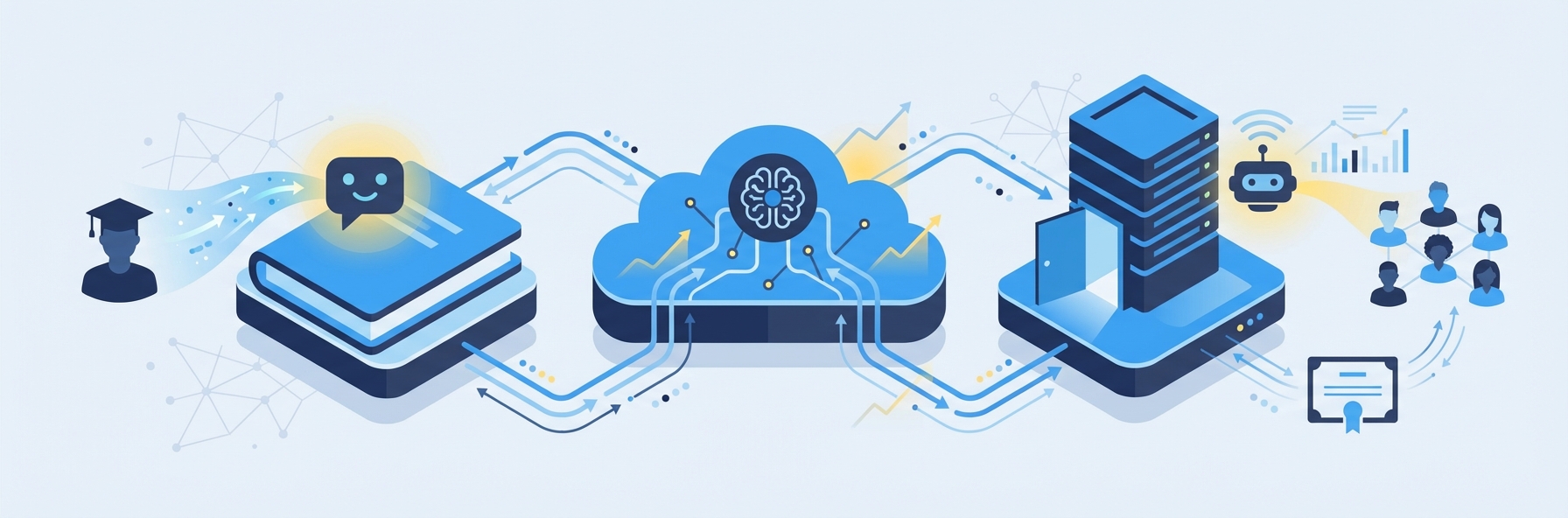
ChatGPT (OpenAI)
The most widely used AI chatbot globally, ChatGPT is not education-specific but is extensively used by students and educators. Its strengths include broad knowledge, strong reasoning for STEM subjects, code generation, and writing assistance. Its weaknesses in educational contexts include a lack of built-in Socratic guardrails (it will provide direct answers unless specifically instructed not to), potential for hallucination, and no inherent curriculum alignment.
Many schools and tutoring centers use ChatGPT with custom system prompts or custom GPTs configured to behave as educational tutors, but this requires technical sophistication and ongoing prompt engineering.
Khanmigo (Khan Academy)
Khanmigo is the most prominent education-specific AI chatbot, built on GPT-4 in partnership with OpenAI. It is designed with pedagogical principles at its core: it uses Socratic questioning, refuses to give direct answers, provides hints and guiding questions, and aligns with Khan Academy's extensive content library.
Khanmigo serves as both a student tutor and a teacher assistant. For students, it provides personalized tutoring across math, science, humanities, and computer science. For teachers, it helps with lesson planning, generates assessments, and provides insights into student performance.
The platform is available for individual subscribers and through school and district partnerships. Its integration with Khan Academy's free content library gives it a unique advantage in terms of curriculum breadth and alignment.
Duolingo Max
Duolingo Max applies AI chatbot technology to language learning through two features: "Roleplay" (conversational practice in real-world scenarios) and "Explain My Answer" (personalized grammar explanations when a student makes a mistake). Both features use GPT-4 to generate contextual, personalized interactions that go far beyond Duolingo's traditional multiple-choice and fill-in-the-blank exercises.
What makes Duolingo Max notable is how it integrates the chatbot experience into the broader learning flow rather than offering it as a standalone feature. The AI conversations are contextual — they relate to what the student has been studying — and the explanations reference the specific mistake the student made.
Microsoft Copilot for Education
Microsoft's AI assistant, integrated into Microsoft 365 Education, provides chatbot-style AI support within the tools many schools already use: Word, PowerPoint, OneNote, and Teams. Teachers use it for content creation and lesson planning; students use it for research assistance and writing support. Its integration with the Microsoft ecosystem makes it frictionless for schools that are already Microsoft shops.
Institutional Custom Chatbots
An increasing number of universities and large school districts are building custom chatbots using LLM APIs (OpenAI, Anthropic, Google) combined with RAG systems trained on their own institutional data. These chatbots handle admission queries, course selection guidance, financial aid questions, and academic support, tailored to the specific institution's programs, policies, and terminology.
What the Research Says About AI Chatbot Effectiveness
The research base on AI chatbot education is growing rapidly but remains mixed, reflecting the technology's youth and the diversity of implementations.
Evidence of Effectiveness
Personalized practice: A randomized controlled trial conducted by Khanmigo in partnership with Stanford's Graduate School of Education (2024) found that students who used the AI tutor for math practice showed learning gains equivalent to approximately 0.2 standard deviations over the control group — a modest but meaningful effect, comparable to moving from the 50th to the 58th percentile.
Student engagement: Multiple studies have found that students interact more frequently and for longer durations with AI chatbots than with traditional homework help resources. A 2026 study by Xiao et al. in Computers & Education found that students using AI tutoring chatbots completed 30 percent more practice problems than a control group using static resources.
Administrative efficiency: Georgia State University's Pounce chatbot research demonstrated measurable improvements in enrollment outcomes, with a 21 percent reduction in summer melt attributed to the chatbot's personalized nudging.
Accessibility: AI chatbots provide support in languages and at times that human support cannot match. Multilingual chatbots serve English language learners and international students who might otherwise struggle to access help. The 24/7 availability benefits students who learn outside traditional hours.
Evidence of Limitations
Conceptual understanding vs. procedural fluency: A 2024 study by Bastani et al. at the University of Pennsylvania found that students who used ChatGPT for math practice performed 17 percent worse on subsequent assessments when the AI was removed, compared to students who practiced without AI assistance. The study suggested that access to instant AI homework help may reduce the productive struggle that builds deep understanding.
Hallucination in STEM: While LLM accuracy has improved dramatically, AI chatbots still produce incorrect mathematical steps, flawed scientific explanations, and fabricated citations at rates that are concerning for educational contexts. A 2026 audit of ChatGPT's math tutoring accuracy found error rates of approximately 5 to 10 percent for multi-step algebra problems — acceptable for practice but not for high-stakes assessment.
Equity concerns: Students who already have strong academic skills tend to use AI chatbots more effectively, potentially widening rather than narrowing achievement gaps. The ability to formulate effective prompts and critically evaluate AI responses is itself a skill that correlates with prior academic achievement.
Concerns and Challenges
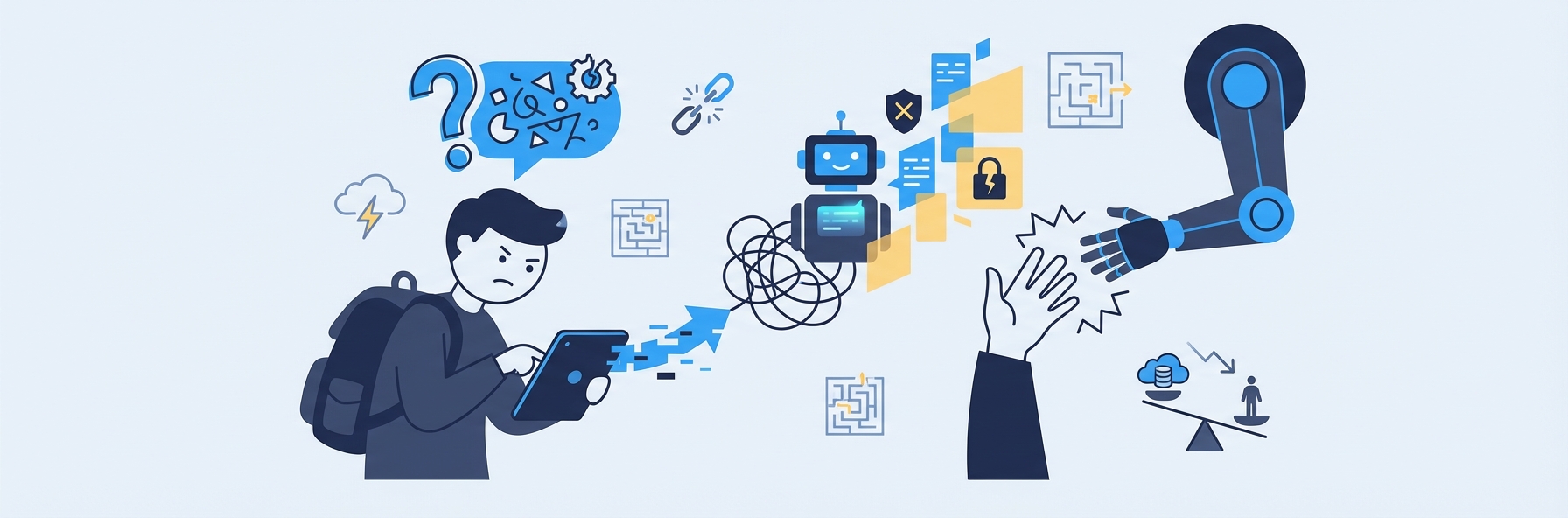
Academic Integrity
The most discussed concern. When AI chatbots can generate essays, solve math problems, write code, and produce lab reports, how do educators distinguish student work from AI work? The challenge is particularly acute because AI-generated content is increasingly difficult to detect — AI detection tools have high false positive rates and can be bypassed with minor editing.
The most effective responses move beyond detection toward assessment redesign: oral examinations, in-class writing, project-based assessment, process portfolios, and assessments that require application of knowledge to novel situations rather than reproduction of information.
Accuracy and Hallucination
AI chatbots can produce plausible-sounding but incorrect information with high confidence. In educational contexts, this is particularly dangerous because students may not have the subject knowledge to identify errors. A student learning algebra who receives an incorrect step-by-step solution from an AI chatbot may internalize the mistake.
Mitigation strategies include RAG systems grounded in verified educational content, human review of chatbot interactions, and explicit training for students on how to verify AI-generated information.
Over-Dependence and Reduced Effort
There is legitimate concern that students who rely heavily on AI chatbots for homework help may not develop independent problem-solving skills, persistence, or tolerance for productive struggle. The convenience of instant AI assistance may short-circuit the learning process that comes from wrestling with difficult material.
Research on this question is still emerging, but early findings (such as the Bastani et al. study cited above) suggest the concern has empirical support. The key is designing AI chatbot interactions that promote active learning — Socratic questioning, hints rather than answers, and explicit encouragement to attempt problems before seeking help.
Privacy and Data Security
AI chatbot education tools process potentially sensitive information: student questions reveal knowledge gaps, personal concerns, and sometimes private information shared conversationally. Ensuring that this data is handled in compliance with FERPA, COPPA, GDPR, and other applicable regulations is essential. Educators should verify that chatbot providers do not use student interactions to train their general models and that data retention policies are appropriate.
Bias and Representation
LLMs trained on internet text data inherit the biases present in that data. In educational contexts, this can manifest as culturally narrow explanations, examples that do not resonate with diverse student populations, or language patterns that disadvantage non-native English speakers. Education-specific fine-tuning and diverse training data help mitigate these issues but do not eliminate them entirely.
Best Practices for Schools and Tutoring Centers
Develop a Clear AI Use Policy
Before deploying AI chatbots, establish a policy that defines:
- Which AI tools are approved for student use
- What types of assistance are acceptable (concept explanation, practice guidance) vs. prohibited (completing assignments, generating submissions)
- How AI chatbot interactions are monitored and reviewed
- Data privacy protections and compliance measures
- Consequences for policy violations
Choose Education-Specific Tools Over General-Purpose LLMs
General-purpose AI chatbots like ChatGPT are powerful but lack the guardrails, curriculum alignment, and pedagogical design of education-specific platforms. When possible, choose tools built for educational use — with Socratic questioning, answer withholding, curriculum alignment, and audit trails built in.
Train Students on Effective AI Use
Students need explicit instruction on how to use AI chatbots productively: formulating clear questions, evaluating AI responses critically, understanding the limitations of AI-generated content, and recognizing when to seek human help. AI literacy is as important as the tools themselves.
Maintain Human Oversight
AI chatbots should augment, not replace, human support. Establish protocols for regular review of chatbot interactions, escalation pathways for issues the chatbot cannot handle, and periodic assessment of chatbot accuracy and effectiveness. No AI system should be the sole source of support for any student.
Use AI Chatbots to Supplement, Not Replace, Core Instruction
The most effective implementations use AI chatbots for practice, review, and homework help — supplementing the instruction provided by human educators. The chatbot handles the "explain it one more time at midnight" use case while the human teacher handles concept introduction, motivation, and the nuanced pedagogical decisions that AI cannot make.
IntelGrader's AI Student Support Vision
IntelGrader is developing AI chatbot capabilities designed specifically for the tutoring center context, complementing its core AI grading platform. The vision is an integrated system where the AI chatbot has context that generic chatbots lack: it knows which worksheets the student has completed, which questions they got wrong, and which concepts they are currently working on.
This context-awareness transforms the chatbot from a generic question-answering tool into a personalized support system. When a student asks for help with a problem, the chatbot can reference their specific grading history, identify the underlying concept they are struggling with, and provide targeted explanations and practice — all aligned with the tutor's curriculum and teaching approach.
The chatbot is designed to work within guardrails appropriate for the tutoring center environment: it guides rather than gives answers, it logs interactions for tutor review, and it escalates to the human tutor when the student needs more than practice support. Combined with IntelGrader's smart grading and upcoming adaptive testing features, the AI chatbot creates a comprehensive support ecosystem where grading data informs tutoring, tutoring data informs assessment, and the student receives consistent, personalized support at every stage.
For tutoring center owners interested in exploring how AI-powered student support can complement AI grading, book a demo to see the IntelGrader platform in action.
The Future of AI Chatbots in Education
Multimodal Interaction
Current chatbots are primarily text-based. The next generation will incorporate voice interaction, handwriting input, image analysis, and interactive simulations. A student will be able to photograph a math problem, speak a question about it, and receive a response that includes visual step-by-step explanations — all in a single conversational flow.
Emotional Intelligence
AI chatbots are developing the ability to detect emotional cues in student interactions — frustration, confusion, boredom, anxiety — and adjust their responses accordingly. A student who is frustrated might receive encouragement and a simplified explanation; a student who is bored might receive a more challenging problem or an interesting application of the concept. This emotional sensitivity, while still far from human empathy, represents a meaningful improvement in the educational chatbot experience.
Curriculum-Embedded AI
Rather than existing as standalone tools, AI chatbots will become embedded in every layer of the educational technology stack: inside LMS platforms, within digital textbooks, integrated with grading systems, and linked to student information systems. The chatbot will have full context about where the student is in the curriculum, what they have mastered, and what they are about to learn — enabling far more relevant and timely support.
Creative and Immersive Learning
AI chatbots will move beyond text-based Q&A into creative and immersive formats. Imagine a history chatbot that presents content through interactive comic book-style narratives, a geography bot that creates explorable virtual environments, or a physics tutor that generates interactive simulations where students can manipulate variables and observe outcomes in real time. These multimodal, creative approaches to AI-powered learning are already in early development and represent the next frontier of the AI chatbot education space.
Proactive Outreach
Current chatbots are reactive — they respond when students initiate conversations. Future systems will be proactive: "I noticed you struggled with factoring on yesterday's worksheet. Want to work through some practice problems together?" This shift from reactive to proactive support mirrors what the best human tutors do naturally and could significantly impact learning outcomes for students who would not seek help on their own.
Frequently Asked Questions
What is an AI chatbot in education?
An AI chatbot in education is a software application powered by artificial intelligence — typically large language models (LLMs) — that can engage in natural language conversations with students and educators. These chatbots answer questions, explain concepts, provide homework help, assist with administrative queries, and offer personalized learning support. Unlike rule-based chatbots of the past, modern AI education chatbots understand context, generate nuanced responses, and adapt to individual users.
Is it cheating to use AI chatbots for homework?
It depends on how the chatbot is used and what the institution's policy permits. Using an AI chatbot to understand a concept, work through practice problems with guided support, or get feedback on your reasoning is generally considered legitimate educational use. Using a chatbot to generate complete assignment submissions and presenting them as your own work is academic dishonesty. The distinction is between using AI as a learning tool versus using it as a shortcut that bypasses the learning process. Schools and tutoring centers should have clear policies defining acceptable use.
How accurate are AI chatbots for math and science help?
Modern AI chatbots are highly capable for math and science but not infallible. For arithmetic, algebra, and standard procedures, accuracy exceeds 90 percent. For multi-step problem solving, complex proofs, and advanced topics, error rates increase to 5-10 percent depending on the model and subject. AI chatbots should be used as supplements to — not replacements for — human instruction. Students should be trained to verify AI-generated solutions, and education-specific platforms with RAG systems and verified content databases are more reliable than general-purpose chatbots.
Are AI chatbots safe for student privacy?
Safety depends on the specific tool and implementation. Education-specific chatbot platforms designed for compliance with FERPA, COPPA, and GDPR employ encryption, data minimization, and restricted data sharing. General-purpose consumer AI chatbots may use conversation data for model training, which raises privacy concerns when students share personal information. Schools and tutoring centers should choose education-focused tools with clear data processing agreements and verify compliance before deployment.
How can tutoring centers use AI chatbots effectively?
Tutoring centers can use AI chatbots as an extension of their tutoring services: providing homework help between sessions, offering practice support when tutors are unavailable, and answering common questions about concepts recently covered in lessons. The key is choosing a chatbot that integrates with the center's workflow and curriculum. IntelGrader is developing an AI chatbot that integrates directly with its grading platform, giving the chatbot context about each student's performance and enabling targeted, personalized support. Book a demo to learn more.
Sources
Bastani, H., Bastani, O., Sungu, A., Ge, H., Kabakcı, O., & Mariman, R. (2024). "Generative AI Can Harm Learning." University of Pennsylvania Wharton School Working Paper. — Research on the impact of AI homework assistance on subsequent student performance.
Xiao, Z., et al. (2023). "Evaluating the Effectiveness of AI Chatbots for Educational Support: A Randomized Controlled Trial." Computers & Education, 195, 104723. — RCT evidence on student engagement and practice completion with AI tutoring chatbots.
Page, L. C., & Gehlbach, H. (2017). "How an Artificially Intelligent Virtual Assistant Helps Students Navigate the Road to College." AERA Open, 3(4). — Research on Georgia State University's Pounce chatbot and its impact on enrollment outcomes.
UNESCO. (2026). Guidance for Generative AI in Education and Research. — International framework addressing responsible deployment of AI chatbots in educational settings.
Mollick, E., & Mollick, L. (2023). "Using AI to Implement Effective Teaching Strategies in Classrooms." Wharton School Working Paper. — Practical research on implementing AI tools, including chatbots, in educational contexts.
Explore more on the IntelGrader blog or book a demo to see how AI-powered grading and student support can transform your tutoring center.
Ready to transform your grading?
See how IntelGrader can save your tutoring centre 10+ hours per week with AI-powered grading.