
Education Technology Trends in AI Grading
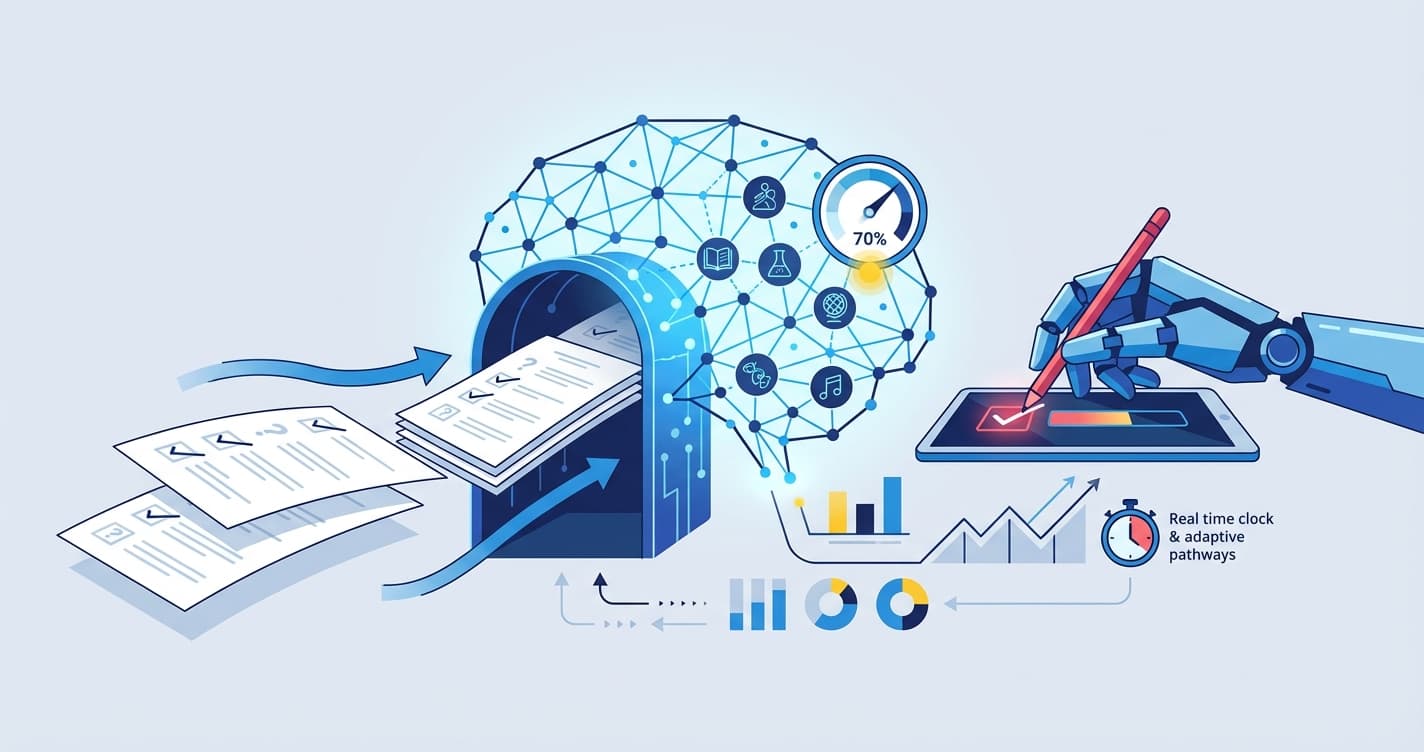
Because teams search for education technology trends, this guide keeps the workflow practical. It explains where AI helps, what teachers should review, and how to turn scoring into better student feedback.
The Current State of AI Grading
AI grading refers to the use of artificial intelligence systems -- including machine learning, computer vision, and natural language processing -- to automatically evaluate student work, assign scores, and generate feedback. In 2026, AI grading has moved beyond the early-adopter phase into mainstream education technology, with tutoring centers, K-12 schools, and universities deploying it for everything from multiple-choice tests to handwritten math worksheets to essay assessment.
One practical branch of this shift is AI answer evaluation, especially for schools and coaching centres handling descriptive work.
The technology's current capabilities are substantial. Optical character recognition can read student handwriting with accuracy rates comparable to human graders. Natural language processing models can evaluate essay quality across multiple rubric dimensions. Machine learning systems can follow multi-step mathematical working and award partial credit. These are not research demos -- they are production systems grading millions of student submissions annually.
Yet we are still in the early chapters of what AI grading will become. The trends shaping the next five years will transform not just how student work is scored but how assessment itself is conceived, designed, and experienced.
Trend 1: Multimodal AI Assessment
What Is Changing
The most significant AI grading trend is the shift from single-modality assessment (grading text, or grading images, or grading code) to multimodal AI that processes multiple input types simultaneously. Multimodal AI models -- like those powering GPT-4V, Gemini, and Claude -- can interpret images, text, handwriting, diagrams, and even audio within a unified framework.
For grading, this means a single AI system can evaluate a student submission that includes handwritten math working, a drawn diagram, typed annotations, and a brief written explanation -- all on the same page. Previously, each of these would require a separate AI system, or more likely, a human grader.
Why It Matters
Real student work is inherently multimodal. A physics problem might involve a free-body diagram, mathematical calculations, and a written explanation of the result. A geometry proof includes spatial reasoning, symbolic notation, and logical argumentation. Grading these submissions accurately requires understanding all modalities and how they relate to each other.
For tutoring centers, multimodal AI unlocks the ability to grade worksheets that combine numerical problems with short written explanations or diagrams -- a common format in math and science tutoring. Platforms like IntelGrader already handle handwritten math with high accuracy; the multimodal trend extends this capability to mixed-format submissions. Learn more about the current state of AI grading for handwritten work in our guide to AI grading for handwritten math.
Timeline
Multimodal grading for text and images is available now in research and early production systems. Widespread commercial availability with high accuracy across all modalities is expected by 2027-2028.
Trend 2: Real-Time Feedback Loops
What Is Changing
Traditional assessment follows a linear sequence: teach, assign, collect, grade, return. The delay between student work and feedback can be hours, days, or even weeks. AI grading trends are collapsing this timeline to near-zero.
The next evolution goes further: rather than grading completed work after submission, AI systems will provide real-time feedback as students work. Imagine a student working through a math problem on paper, with a camera-enabled AI system watching their progress and providing gentle nudges when it detects an error in real time -- before the student builds an entire solution on a faulty foundation.
Why It Matters
Learning science is unambiguous on this point: the shorter the gap between action and feedback, the more effective the learning. A correction received while the student is still engaged with the problem is dramatically more valuable than one received the next day. Real-time AI feedback transforms assessment from a retrospective judgment into an active learning companion.
For tutoring centers, real-time feedback means students can work through worksheets independently with AI support, receiving guidance on each question before moving to the next. This amplifies the tutor's capacity -- instead of circulating among students to check work manually, the tutor can focus on students who need conceptual explanation while the AI handles procedural feedback.
Timeline
Post-submission instant grading (within seconds of upload) is available now -- platforms like IntelGrader deliver this today. True real-time feedback during the working process is in active development, with early implementations expected by 2027.
Trend 3: Adaptive Assessment
What Is Changing
Adaptive assessment -- where the difficulty, content, and sequence of questions adjust based on the student's responses -- is not new. Computer-adaptive testing (CAT) has been used in standardized tests like the GRE for decades. What is changing is the sophistication and accessibility of adaptation.
Current AI grading trends point toward continuously adaptive assessment that goes beyond simple difficulty adjustment. Future systems will:
- Select questions targeting specific knowledge gaps identified in previous work
- Adjust the type of question (not just difficulty) based on how the student learns best
- Provide different levels of scaffolding based on student confidence and fluency
- Seamlessly blend assessment with instruction, so students experience practice and learning as a single activity rather than separate events
Why It Matters
Fixed-form assessments -- where every student answers the same questions in the same order -- are inefficient. A student who has mastered addition wastes time on easy problems, while a student still building foundational skills is frustrated by problems beyond their current level. Adaptive assessment matches the challenge to the learner, which both improves measurement precision and accelerates learning.
For tutoring centers, adaptive assessment powered by AI grading means each student's practice session is automatically personalized. The AI analyzes grading data from previous sessions and selects problems at the right difficulty level, targeting the specific concepts each student needs to practice. This is the kind of personalization that would require one-to-one instruction to achieve manually.
Explore how data-driven assessment fits into a tutoring software strategy that scales personalization across your entire center.
Timeline
Basic adaptive difficulty (harder/easier questions based on performance) is available in several platforms today. Sophisticated multi-dimensional adaptation that considers knowledge gaps, learning style, and instructional integration will mature between 2027 and 2029.
Trend 4: AI Bias Detection and Fairness

What Is Changing
As AI grading moves into higher-stakes contexts, scrutiny of its fairness is intensifying. AI grading trends in 2026 reflect a growing commitment to bias detection, fairness auditing, and equitable assessment.
The concern is legitimate. AI grading models learn from human-graded training data. If the training data reflects human biases -- favoring certain handwriting styles, dialects, cultural references, or presentation formats -- the AI will replicate those biases at scale. What might be an occasional inconsistency when 10 human graders evaluate papers becomes a systematic bias when a single AI model grades thousands.
What the Industry Is Doing
Several approaches are emerging:
- Fairness audits: Testing AI grading systems for differential performance across demographic groups (gender, ethnicity, language background, socioeconomic status) before deployment.
- Bias-aware training: Curating training data to ensure representative coverage of diverse student populations, handwriting styles, and response patterns.
- Algorithmic debiasing: Mathematical techniques to reduce bias in model predictions while maintaining accuracy.
- Transparency reporting: Publishing performance metrics disaggregated by demographic groups so that institutions can evaluate fairness before adopting a tool.
- Human-in-the-loop safeguards: Maintaining human review for high-stakes decisions while using AI for efficiency in routine grading.
Why It Matters
Fairness is not just an ethical concern; it is a practical one. An AI grading system that systematically underscores students with certain handwriting characteristics or linguistic backgrounds will undermine trust, produce inaccurate assessments, and potentially violate anti-discrimination regulations. Institutions that adopt AI grading without evaluating fairness expose themselves to both pedagogical and legal risk.
For tutoring centers serving diverse student populations, choosing platforms that actively address bias ensures that every student's work is evaluated on its merits, not its surface characteristics. IntelGrader's OCR is trained on diverse student handwriting to ensure fair assessment across the range of handwriting quality and styles that real tutoring centers encounter.
Timeline
Fairness auditing is becoming standard practice among responsible AI grading vendors in 2026. Regulatory requirements for algorithmic fairness in education are expected to formalize between 2027 and 2029.
Trend 5: Student-Centered Assessment Design
What Is Changing
Traditional assessment design starts from the institution's perspective: what do we need to measure, and how can we measure it efficiently? AI grading trends are enabling a shift toward student-centered assessment that prioritizes the student's learning experience.
This means:
- Choice in demonstration of learning. Students might choose whether to demonstrate understanding through a written explanation, a worked math problem, a diagram, or even a short video. Multimodal AI makes it possible to grade all of these consistently.
- Process over product. AI can evaluate not just the final answer but the entire problem-solving process, valuing the reasoning journey even when the destination is wrong. Partial credit becomes the default rather than the exception.
- Self-assessment and reflection. AI provides students with detailed feedback that enables meaningful self-assessment, building metacognitive skills alongside content knowledge.
- Reduced test anxiety. When assessment is frequent, low-stakes, and immediately useful for learning, the anxiety associated with high-stakes testing diminishes. Students experience assessment as a tool for growth rather than a source of stress.
Why It Matters
Assessment should serve learning, not the other way around. When the primary purpose of assessment is to sort and rank students, the assessment tail wags the instructional dog. Student-centered assessment, enabled by AI grading, reorients the system toward its proper purpose: understanding what each student knows, what they need to learn next, and how to help them get there.
Tutoring centers are particularly well-positioned to adopt student-centered assessment because they are not bound by the standardized testing constraints that limit schools. A tutoring center using IntelGrader can assign worksheets calibrated to each student's level, provide instant feedback that the student reviews with their tutor, and track progress on a personalized learning journey.
Timeline
Elements of student-centered assessment are available now (instant feedback, partial credit, progress tracking). Full choice-based multimodal assessment with AI grading will develop over 2027-2030.
Trend 6: Regulatory Frameworks for AI in Education

What Is Changing
As AI grading moves from supplementary tool to core infrastructure, governments and regulatory bodies are developing frameworks for AI use in education. The European Union's AI Act, which classifies AI in education as "high-risk," is the most prominent example, but similar regulatory activity is underway in the United States, United Kingdom, Australia, Singapore, and India.
Key Regulatory Themes
- Transparency. Institutions using AI grading may be required to disclose this to students and parents, explain how the AI makes decisions, and provide avenues for human review of automated decisions.
- Data protection. Student work processed by AI grading systems is personal data. Regulations like FERPA (US), GDPR (EU), and PDPA (Singapore) impose strict requirements on how this data is collected, stored, processed, and deleted.
- Algorithmic accountability. Some frameworks require that AI systems used in education undergo impact assessments demonstrating that they do not produce unfair or discriminatory outcomes.
- Right to human review. Students or parents may have the right to request that an AI-generated grade be reviewed by a human, particularly for high-stakes decisions.
- Vendor compliance. AI grading software vendors will need to demonstrate compliance with applicable regulations, including documentation of training data, model architecture, and validation processes.
Why It Matters
Regulatory compliance is not optional, and the direction of regulation is clear: more oversight, more transparency, and more accountability. Institutions that adopt AI grading today should choose vendors that are proactively preparing for these requirements rather than waiting to be forced into compliance.
For tutoring centers operating across multiple countries, understanding the regulatory landscape is essential. Centers in Singapore, India, the Middle East, and other markets each face different regulatory environments. Choosing a platform that builds compliance into its architecture simplifies multi-market operations.
Timeline
The EU AI Act's education provisions take effect in phases between 2026 and 2027. US federal guidance is expected by 2027. National regulations in other markets will follow between 2027 and 2030.
Trend 7: Accessibility and Inclusion Innovation
What Is Changing
AI grading trends increasingly prioritize accessibility -- ensuring that automated assessment works well for all students, including those with disabilities, those writing in non-Latin scripts, and those in resource-constrained environments.
Key Developments
- Accommodations built into the system. AI grading systems are learning to handle extended time, large-print submissions, alternative response formats, and assistive technology output without requiring manual workarounds.
- Script and language diversity. OCR systems are expanding beyond English and Latin-script handwriting to support Arabic, Devanagari, Chinese, and other scripts. This is critical for AI grading adoption in global markets.
- Low-bandwidth and mobile-first design. Many students and tutoring centers operate in environments with limited internet connectivity. Mobile-first AI grading platforms that work on smartphones with minimal bandwidth are expanding access to communities that cannot afford dedicated scanning hardware.
- Universal design for assessment. AI enables assessments that automatically adjust presentation (font size, spacing, color contrast) and format (audio, visual, text) based on student needs, without creating separate "accommodated" versions.
Why It Matters
If AI grading only works well for students with neat handwriting, fast internet, and standard accommodations, it risks widening rather than narrowing educational inequity. The most responsible AI grading trends aim to make automated assessment work for every student, regardless of ability, location, or resources.
For tutoring centers serving diverse populations, accessibility is a differentiator. Centers that can offer AI-graded assessment to all students -- including those with learning differences or those writing in non-English scripts -- serve a broader market and provide more equitable education.
Timeline
Mobile-first AI grading is available now (platforms like IntelGrader use phone-based photo submission). Multi-script OCR is expanding rapidly in 2026. Comprehensive accessibility features integrated into AI grading workflows will mature between 2027 and 2029.
Expert Predictions for AI Grading in 2030
Based on the convergence of these trends, here is what the AI grading landscape will likely look like by 2030:
Assessment Becomes Continuous, Not Episodic
The distinction between "learning time" and "assessment time" will blur. AI-powered systems will continuously monitor student understanding through natural interactions -- practice problems, discussions, projects -- without requiring separate test events. Formal exams will still exist for certification purposes, but the bulk of assessment will happen seamlessly within instruction.
Every Student Gets Personalized Assessment
Adaptive AI will ensure that no two students receive identical assessments. Each student's practice and evaluation will be calibrated to their current knowledge level, learning pace, and specific areas of weakness. This level of personalization is currently available only through expensive one-to-one tutoring; AI will democratize it.
Tutors and Teachers Focus Exclusively on Teaching
With AI handling all routine grading and progress tracking, educators will spend close to zero time on marking. Their role will shift entirely to instruction, mentoring, relationship-building, and the high-judgment educational decisions that AI cannot make. This is not a reduction in the educator's role -- it is an elevation of it.
Assessment Data Drives Curriculum Design
Aggregate grading data from millions of student submissions will reveal patterns invisible to individual educators: which instructional sequences are most effective, where common misconceptions originate, and which teaching methods produce the strongest outcomes. This data will inform curriculum design at a scale and granularity never before possible.
AI Grading Is Regulated Like Financial Services
By 2030, AI grading systems used in high-stakes contexts will be subject to audit, certification, and regulatory oversight comparable to financial services technology. Vendors will need to demonstrate accuracy, fairness, security, and transparency to operate in regulated markets.
What Educators Should Do Now
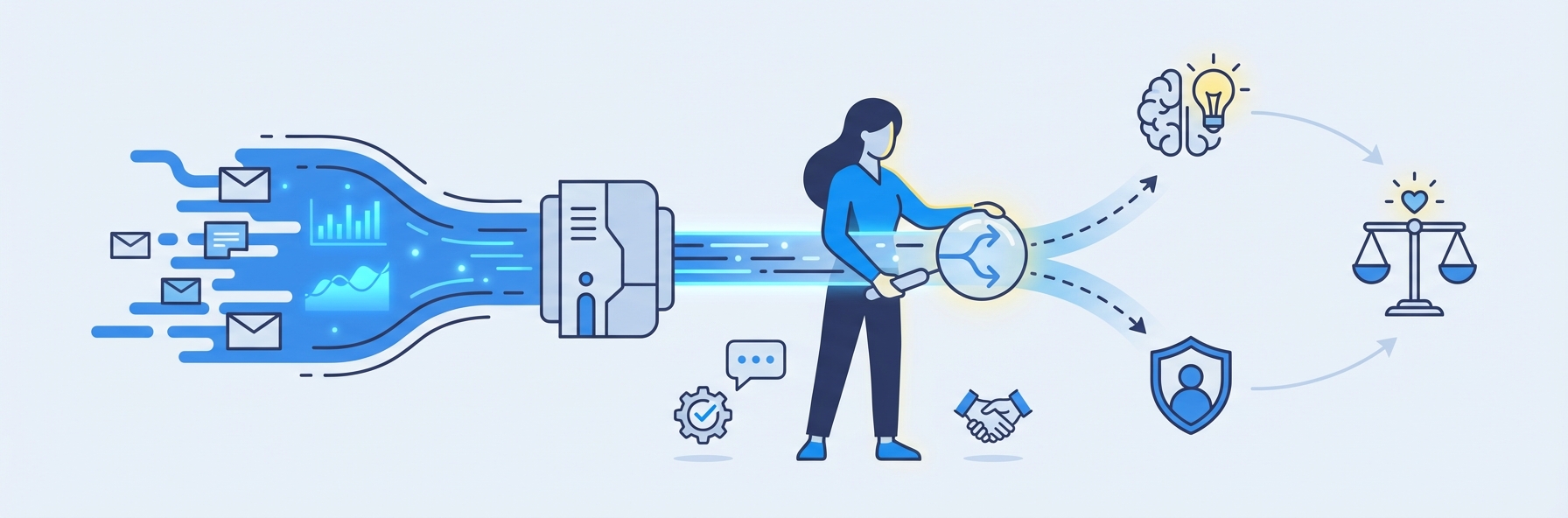
Understanding AI grading trends is valuable only if it informs action. Here is what educators and tutoring center operators should do now to prepare for where assessment is heading.
Adopt AI Grading for Routine Assessment Today
If you are not already using AI grading for daily practice worksheets and homework, start now. The technology for routine automated grading is mature, proven, and delivers immediate ROI through time savings and improved feedback quality. Platforms like IntelGrader make the transition straightforward for tutoring centers. Book a demo to see how it works with your specific worksheets.
Build a Data Foundation
The future trends described above -- adaptive assessment, personalized learning, curriculum optimization -- all depend on assessment data. Every worksheet you grade with AI today becomes a data point that powers smarter decisions tomorrow. Start collecting and organizing this data now so you have a meaningful dataset when more sophisticated analytics tools become available.
Invest in Change Management
The biggest barrier to AI grading adoption is not technology -- it is people. Start conversations with your tutors and instructors about how AI grading changes their role for the better. Involve them in tool selection and implementation. Address concerns about job security transparently: AI grading replaces the marking pile, not the teacher.
Choose Vendors Building for the Future
When selecting AI grading tools, evaluate vendors not just on current capabilities but on their trajectory. Are they investing in multimodal assessment? Fairness and bias detection? Adaptive features? Regulatory compliance? A platform that is best-in-class today but shows no sign of evolving with these AI grading trends may be a dead end in three years.
Stay Informed on Regulation
Monitor the regulatory landscape in your markets. If you operate tutoring centers in the EU, Singapore, India, or Australia, regulatory requirements for AI in education are forming now. Proactive compliance is easier and cheaper than reactive compliance.
Experiment with Emerging Capabilities
When your AI grading vendor releases new features -- multimodal grading, adaptive question selection, enhanced analytics -- test them early. The institutions that experiment iteratively, learn from early results, and refine their approach will be better positioned than those that wait for perfect technology before acting.
For a comprehensive overview of the tools available today, see our guides to AI assessment tools and the best AI grading software in 2026. For a deep dive into how automated grading technology works across all assessment types, read our complete guide to automated grading.
Frequently Asked Questions
Will AI grading replace teachers and tutors?
No, and the AI grading trends described in this article actually reinforce the educator's role rather than diminishing it. AI replaces the most repetitive, time-consuming, and least rewarding part of the job: manual grading. As AI takes over marking, educators gain time for instruction, mentoring, relationship-building, and the nuanced educational judgment calls that AI cannot make. The future is not AI instead of teachers -- it is AI amplifying what teachers do best.
How will AI grading change in the next 5 years?
The most significant changes will be multimodal assessment (AI that grades text, handwriting, diagrams, and more in a single submission), real-time feedback during the learning process (not just after submission), adaptive assessment that personalizes question difficulty and content for each student, and stronger regulatory frameworks requiring transparency and fairness. These trends are already underway and will mature substantially between 2026 and 2030.
Is AI grading accurate enough for high-stakes exams?
For routine formative assessment (practice worksheets, homework, in-session exercises), current AI grading is more than accurate enough, and the speed and feedback benefits are transformative. For high-stakes exams with significant consequences for students, best practice in 2026 is a hybrid approach: AI provides the initial grade, and human reviewers check borderline or flagged cases. As accuracy and fairness auditing improve, the scope of fully automated high-stakes grading will expand, but human oversight will remain standard for the foreseeable future.
What AI grading trends should tutoring centers pay attention to?
Tutoring centers should focus on three trends: (1) real-time feedback, which transforms the in-session experience by giving students instant grading during practice; (2) adaptive assessment, which personalizes worksheets to each student's level without requiring the tutor to manually select problems; and (3) progress analytics, which provide the data-driven reporting that parents increasingly expect. IntelGrader is building toward these capabilities specifically for the tutoring center context.
How should educators prepare for AI grading regulations?
Start by understanding which regulations apply in your market (FERPA in the US, GDPR in the EU, PDPA in Singapore, etc.). Choose AI grading vendors that are transparent about their data practices, model training, and fairness auditing. Ensure you can explain to parents and students how AI grading works in your institution. Maintain the ability to provide human review of AI-generated grades when requested. Document your AI grading practices and keep records of vendor compliance certifications.
Sources
European Commission. (2024). AI Act: Regulation on Artificial Intelligence. The EU's landmark regulatory framework classifying AI in education as "high-risk" and establishing requirements for transparency, accuracy, and human oversight. https://digital-strategy.ec.europa.eu/en/policies/regulatory-framework-ai
Holmes, W., Bialik, M., & Fadel, C. (2026). Artificial Intelligence in Education: Promises and Implications for Teaching and Learning (2nd ed.). Center for Curriculum Redesign. A comprehensive examination of AI's role in education including assessment, with analysis of emerging trends and policy implications.
UNESCO. (2026). Guidance for Generative AI in Education and Research. United Nations Educational, Scientific and Cultural Organization. International policy guidance on responsible AI use in education, including automated assessment. https://www.unesco.org/en/digital-education/ai
Luckin, R., & Cukurova, M. (2019). "Designing Educational Technologies in the Age of AI: A Learning Sciences-Driven Approach." British Journal of Educational Technology, 50(6), 2824-2838. Research on how learning science should inform the design of AI-powered educational tools including assessment systems.
Baker, T., & Smith, L. (2019). Educ-AI-tion Rebooted? Exploring the Future of Artificial Intelligence in Schools and Colleges. Nesta Foundation. An analysis of AI adoption in education with practical frameworks for institutional decision-making. https://www.nesta.org.uk
Ready to transform your grading?
See how IntelGrader can save your tutoring centre 10+ hours per week with AI-powered grading.