
AI Grading vs OSM: Key Differences
Because teams search for ai grading vs osm, this guide keeps the workflow practical. It explains where AI helps, what teachers should review, and how to turn scoring into better student feedback.
TL;DR
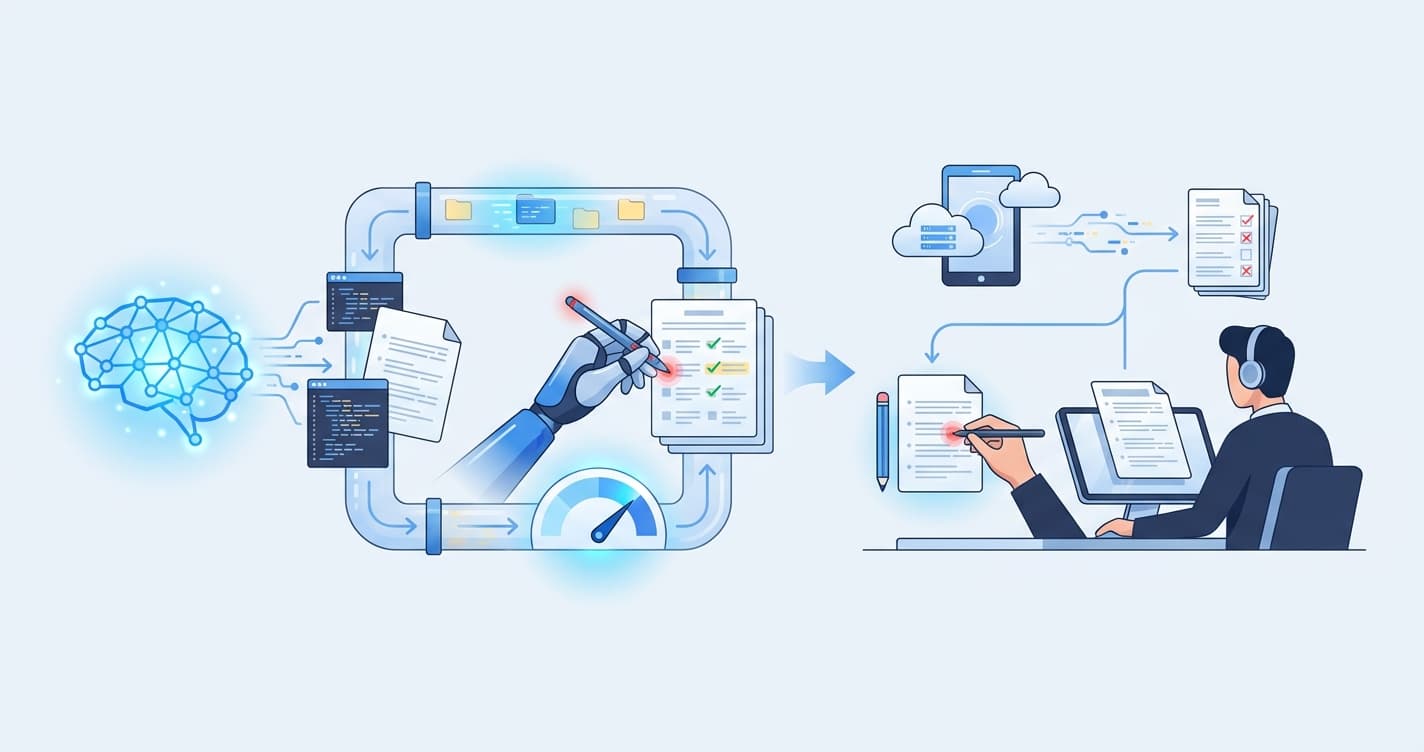
Since CBSE's OSM controversy broke in 2026, "AI grading" and "OSM" have been used interchangeably in social-media commentary. They are not the same thing. OSM is a digital interface for human examiners. AI grading is software that does the actual marking. Confusing the two leads to incorrect conclusions about what digital evaluation is and is not capable of.
The core distinction in one sentence
OSM: humans mark scanned answer sheets through a digital portal. AI grading: algorithms read and mark student answers; humans review.
That is the entire difference, and it changes everything downstream.
Side-by-side comparison
| Capability | OSM (e.g. CBSE's system) | AI grading (e.g. IntelGrader) |
|---|---|---|
| Who grades the answer | Human examiner | AI algorithm (with human review on edge cases) |
| Image quality check | None pre-grading | Automatic — low-quality scans flagged at upload |
| Page completeness check | Manual | Automatic — missing pages blocked at submission |
| Audit trail per grading decision | Limited or none | Per-question, per-student, queryable |
| Grading consistency across batches | Varies (examiner attention, fatigue) | Deterministic — paper 50 is graded the same as paper 1 |
| Examiner bias | Possible — known students get benefit of doubt | None — system does not know who the student is |
| Per-student diagnostics | Score only | Concept-level error tags, root-cause analysis |
| Remediation recommendations | None | Per-student practice paper, batch-level lesson plan |
| Speed | Constrained by examiner capacity | Minutes per batch |
These differences matter when something goes wrong. An OSM failure (blurry scan, missing page) is invisible until a student notices and complains. An AI grading equivalent is caught at upload, before grading even starts.
Why people are confusing the two
Three reasons:
Both involve a digital interface. A scanned answer sheet looks the same in OSM and AI grading. The difference is what happens behind the scenes.
OSM has been described in coverage as "machine evaluation" in some Indian media. The word "machine" suggests algorithmic, but in OSM context it just means "computer-displayed."
AI is the headline technology of 2026. Any new digital workflow tends to be associated with AI, whether or not AI is actually doing the work.
What this means in practice
For coaching networks, schools, and tutoring chains: this distinction matters because the tools available in the market are different categories. Picking an "AI grading" tool because you saw OSM in the news will give you something that works very differently from OSM. Picking an OSM-style scan-and-display system because it's cheaper than AI grading will give you a fundamentally different experience.
The seven problems exposed by CBSE OSM 2026 — blurry scans, missing pages, mismatched answer sheets, correct answers marked zero, unevaluated pages, portal crashes, inexplicably low marks — all trace to OSM's design: human examiner + digital portal. A purpose-built AI grading system handles most of these by design, not by examiner discretion. We have documented this in our case study on a CBSE coaching network, where the seven failure modes mapped directly to specific design decisions in our system.
What AI grading can and cannot do
To be clear about the limits:
AI grading does well:
- Marking handwritten work with step-credit on math
- Tagging the type of error (wrong setup, missing step, sign error)
- Producing per-student diagnostic reports
- Identifying cohort-level patterns
- Generating personalised practice material
AI grading still needs human review on:
- Highly creative or open-ended responses
- Edge cases where the rubric itself is ambiguous
- Subjects where domain expertise is essential to verify the AI's call
The point is not that AI grading is always better than human marking. It is that the design choices are different, and the failure modes are different. Both have a place; understanding which is which matters.
A practical decision framework
If you are evaluating digital grading systems in 2026:
- For high-stakes board-style exams with large volumes: Currently the choice is OSM or paper. AI grading at board scale is not yet mainstream.
- For weekly formative testing at coaching centres and schools: AI grading is well-suited. Per-student diagnostics + remediation are the value.
- For practice papers and mock tests: AI grading shines because the cadence is high and the rubrics are clear.
- For diagnostic assessments where you need to know which concept the student missed: AI grading is the only category that produces this output.
FAQ
Is CBSE OSM the same as AI grading?
No. OSM uses humans to grade scanned answer sheets through a digital portal. AI grading uses algorithms to do the marking. Different categories of tools.
Does CBSE use AI for marking Class 12 papers?
No. CBSE's OSM system uses human examiners to grade scanned answer sheets on a digital portal. The system is digital but the marking is human.
Could AI grading have prevented the OSM failures?
Many of them, yes. Image quality checks at upload would have prevented blurry-scan grading errors. Page completeness verification would have prevented missing-page issues. Per-question audit trails would have surfaced mis-marked answers immediately rather than weeks later during re-evaluation. We documented this in detail in our CBSE OSM case study.
Is AI grading more accurate than human teachers?
In one CBSE coaching network audit of 588 grading items, AI grading was 94.7% accurate vs 88.6% for the network's human teachers — a 2.16× reduction in errors. Methodology favoured the human side. Results vary by subject, paper format, and rubric clarity.
What about hybrid systems — AI plus human review?
That is the best-in-class setup. AI does the first-pass marking; humans review flagged cases (low-confidence, edge rubrics, ambiguous answers). Most modern AI grading platforms work this way by default.
Related reading
Ready to transform your grading?
See how IntelGrader can save your tutoring centre 10+ hours per week with AI-powered grading.