How to Start a Tutoring Center: The Complete Guide for 2026

How to Start a Tutoring Center: The Complete Guide for 2026
A tutoring center is a physical or hybrid learning facility where students receive supplemental instruction — typically in subjects like math, reading, and test preparation — outside of regular school hours. Learning how to start a tutoring center involves planning your business model, securing a location, building a curriculum, hiring qualified tutors, setting pricing, and investing in the right technology to run your operation efficiently.
The demand for tutoring in the United States has never been higher. Whether you are an experienced educator looking to build your own business, an entrepreneur entering the education space, or an existing tutor ready to scale beyond one-on-one sessions, this guide covers every step of starting a tutoring center from scratch. From market analysis and business planning to technology selection and scaling strategies, you will find everything you need to open your doors with confidence.
Is 2026 the Right Time to Start a Tutoring Center?
The short answer is yes — and the data supports it.
Market Size and Growth
The US private tutoring market is valued at over $10 billion and has grown at a compound annual rate of 7 to 8 percent over the past five years. Several structural forces are driving this growth:
- Post-pandemic learning gaps. The National Center for Education Statistics has documented significant declines in math and reading proficiency among K-12 students. These gaps have not fully recovered, and parents are turning to supplemental education to close them.
- College admissions competition. SAT and ACT preparation remains a major driver of tutoring demand. With college acceptance rates at selective institutions dropping below 10 percent, families are investing earlier and more heavily in test prep.
- State standardized testing. Every US state administers standardized math and reading assessments. Students who struggle on these tests — and their parents — seek outside help.
- AP exam enrollment. AP course participation continues to grow year over year. Students taking rigorous AP math and science courses often need supplemental support.
Competitive Landscape
The tutoring market is fragmented, which is good news for new entrants. National chains like Kumon and Mathnasium have strong brand recognition, but they operate on rigid franchise models that limit flexibility. Many families are actively seeking alternatives — independent centers that offer personalized attention, modern technology, and transparent progress tracking.
Online tutoring platforms expanded rapidly during the pandemic, but many families have returned to preferring in-person or hybrid models. Parents recognize that for younger students especially, a physical learning environment with structured supervision produces better results than a screen.
The Opportunity Gap
Here is what makes 2026 particularly compelling: most tutoring centers — including established ones — are still running on manual, paper-based workflows. Tutors grade by hand. Progress is tracked in spreadsheets. Parent communication is sporadic. The centers that invest in modern technology from day one have an immediate competitive advantage.
If you are learning how to start a tutoring center, building technology into your foundation rather than retrofitting it later puts you ahead of 90 percent of existing operators.
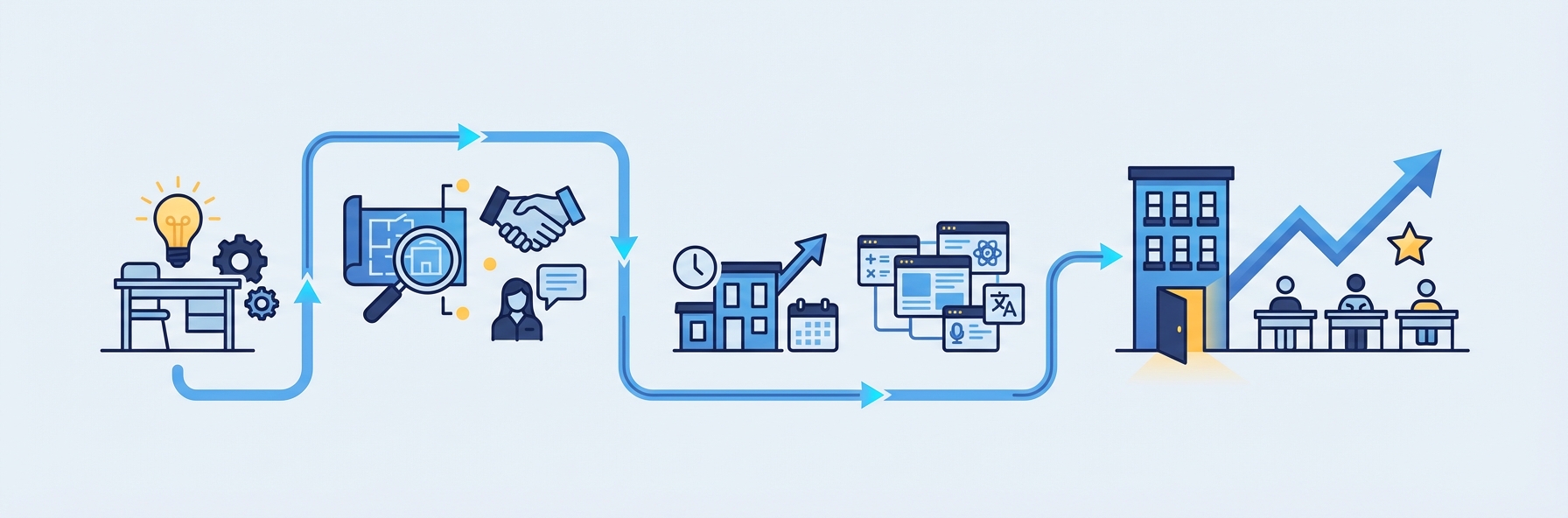
Step-by-Step Guide to Starting a Tutoring Center
Step 1: Write Your Business Plan
Every successful tutoring center starts with a clear business plan. This document does not need to be 50 pages — a focused 10-to-15-page plan covering the following areas is sufficient.
Mission and vision. What subjects will you teach? What age groups will you serve? What outcomes will you deliver? Be specific. "Helping students succeed" is not a mission. "Helping middle and high school students in [city] improve their math grades and SAT scores through structured practice and AI-powered feedback" is a mission.
Target market. Define your ideal customer precisely. Parents of students in grades 6 through 12? SAT-prep-focused families? Students struggling with specific math topics? The more clearly you define your target, the more effectively you can market to them.
Competitive analysis. Identify every tutoring center within a 10-mile radius of your planned location. Visit their websites. Read their Google reviews. Note their pricing, subjects, and any obvious gaps in their offerings. Your center needs to differentiate clearly.
Revenue projections. Build a realistic financial model. How many students do you need at what price point to cover your costs and reach profitability? Most tutoring centers need 30 to 50 active students to break even, depending on overhead.
Funding requirements. Determine how much capital you need to launch and operate for 6 months before reaching breakeven. Detail where the funding will come from: personal savings, small business loan, investors, or a combination.
Step 2: Handle Legal and Administrative Requirements
Starting a tutoring center requires navigating several legal and administrative steps. Requirements vary by state, but here is a general checklist.
Business structure. Most tutoring centers operate as an LLC (limited liability company) for liability protection and tax flexibility. Consult a small business attorney or accountant to choose the right structure for your situation.
Business registration. Register your business name with your state's secretary of state. Obtain an EIN (Employer Identification Number) from the IRS — you will need this for tax filings and bank accounts.
Licenses and permits. Requirements vary by city and state. Check with your local government for business licenses, zoning permits (especially important if you are operating in a residential area), and any education-specific permits. Some states require tutoring centers to register with the state department of education, particularly if they serve students with IEPs or receive public funding.
Insurance. At minimum, you need general liability insurance. If you are leasing a commercial space, your landlord will likely require it. Consider also obtaining professional liability insurance (errors and omissions) and, if you have employees, workers' compensation insurance.
Background checks. If you are hiring tutors who will work with minors, background checks are essential — and in many states, legally required. Establish a clear background check policy before your first hire.
Business bank account. Open a dedicated business bank account. Do not commingle personal and business finances. This simplifies accounting and protects your LLC's liability protection.
Step 3: Choose Your Location
Your location strategy depends on your budget and business model.
Home-based center. The lowest-cost option. Suitable for starting with a small group of students (5 to 10). Check local zoning laws — some residential areas restrict home-based businesses, especially those with regular client traffic. Startup cost: minimal, but growth ceiling is low.
Shared or co-working space. Renting a room in a community center, church, or co-working space offers a professional environment without the overhead of a full commercial lease. Monthly cost: $500 to $1,500 depending on your market.
Commercial lease. The standard choice for centers that plan to grow. Look for spaces in strip malls, office parks, or mixed-use buildings near schools and residential neighborhoods. Ideal size for a new center: 800 to 1,500 square feet, enough for a reception area, 2 to 3 tutoring rooms, and a small office. Monthly rent varies dramatically by market: $1,500 to $5,000 in most suburban areas, higher in major metros.
Key location factors:
- Proximity to target schools
- Visibility and signage opportunities
- Parking availability (parents will be dropping off and picking up)
- Safety and accessibility
- Lease terms (negotiate for a 1-to-2-year initial term with renewal options — avoid locking into a 5-year lease before you have proven the concept)
Step 4: Design Your Curriculum
Your curriculum is your product. It needs to be structured, measurable, and differentiated from what students get at school.
Subject focus. Most successful new tutoring centers start with a narrow focus — typically math — and expand over time. Math is the highest-demand subject for tutoring, it is highly structured (making it easier to build a progression), and it is directly tied to high-stakes tests like the SAT, ACT, and state assessments.
Grade levels. Define which grade levels you will serve. A common starting point is grades 3 through 12, covering elementary math fundamentals through high school algebra, geometry, and pre-calculus.
Worksheet-based practice. The most effective tutoring programs combine instruction with high-volume structured practice. This means worksheets — lots of them. Students need to practice problems repeatedly to build fluency and confidence. This is the model that Kumon, Mathnasium, and other successful chains have proven works.
Progress measurement. Every student should have a clear starting point (a diagnostic assessment), a defined learning path, and regular checkpoints to measure progress. This requires tracking scores over time, identifying topic-level strengths and weaknesses, and adjusting the curriculum based on data.
This is where technology becomes critical from day one. If you are generating 30 to 80 worksheets per session and grading them by hand, you will quickly drown in paper. AI grading tools like IntelGrader eliminate this bottleneck entirely — students get instant feedback, and you get progress data automatically. Building this into your workflow from the start means you never develop the bad habit of manual grading.
Curriculum resources. You do not need to create every worksheet from scratch. High-quality worksheet resources are available from publishers, online repositories, and test prep companies. IntelGrader works with any worksheet format, so you can use whatever materials best fit your curriculum.
Step 5: Hire Your First Tutors
Your tutors are the face of your center and the primary driver of student outcomes. Hire carefully.
Qualifications. At minimum, tutors should have strong subject knowledge and the ability to explain concepts clearly to students at different levels. College students majoring in math or education can be excellent tutors at a lower cost. Certified teachers command higher rates but bring professional training and credibility.
Where to find tutors. Local universities (post on their job boards), education job sites like Indeed and SchoolSpring, word-of-mouth referrals, and local teaching communities on social media. For SAT and ACT tutors specifically, look for candidates with verified high test scores.
Compensation. Tutor pay varies by market and qualifications. In most US markets in 2026, expect to pay $18 to $30 per hour for college-student tutors and $25 to $50 per hour for credentialed teachers. Some centers pay a flat rate per session rather than an hourly wage.
Training. Even experienced teachers need training on your specific curriculum, workflow, and technology. Create a simple onboarding process that covers your teaching methodology, your center's policies, how to use your software tools, and your expectations for student interaction and parent communication.
Start small. When learning how to start a tutoring center, resist the urge to hire a large team immediately. Start with 1 to 2 tutors (plus yourself, if you will be tutoring). Add staff as enrollment justifies it.
Step 6: Set Your Pricing
Pricing is one of the most consequential decisions you will make. Price too low and you will struggle to cover costs. Price too high and you will lose families to competitors.
Research your market. Survey the pricing of every tutoring center in your area. Call them, check their websites, and read parent forums. Understand the price range families in your market are accustomed to.
Common pricing models:
- Per-session pricing. $40 to $80 per hour for individual tutoring, $20 to $40 per hour for small group sessions. Simple to understand but creates unpredictable revenue.
- Monthly packages. $200 to $500 per month for a set number of sessions (typically 8 to 12). Creates more predictable revenue and encourages regular attendance.
- Semester or term packages. $1,000 to $3,000 per term. Higher upfront commitment but provides excellent cash flow predictability and lower churn.
Recommended approach for new centers: Offer monthly packages as your primary pricing model. This gives families flexibility while providing you with predictable recurring revenue. Offer a small discount for term prepayment. Avoid per-session pricing as your primary model — it incentivizes inconsistent attendance, which hurts both student outcomes and your revenue stability.
Trial sessions. Offer a free or reduced-cost trial session to lower the barrier to enrollment. This is the single most effective conversion tool for new tutoring centers. Let families experience your teaching, your environment, and your technology before committing.
Step 7: Build Your Marketing Engine
You have a location, curriculum, staff, and pricing. Now you need students.
Google Business Profile. This is your single most important marketing asset. Create and optimize your Google Business Profile immediately. Most parents searching for "tutoring center near me" or "math tutoring in [city]" will find you through Google Maps and local search results. Include your hours, location, subjects, photos of your center, and a link to book a trial session.
Website. Build a clean, professional website. It does not need to be elaborate, but it must clearly communicate what you offer, who you serve, your pricing (or a "book a consultation" call to action), testimonials from early families, and your location and contact information. Optimize for local SEO by including your city, neighborhood, and relevant keywords throughout.
Google Ads. Paid search advertising on Google is the fastest way to generate leads for a new tutoring center. Target keywords like "math tutoring [city]," "SAT prep near me," and "tutoring center [neighborhood]." Start with a budget of $500 to $1,000 per month and optimize based on which keywords generate actual enrollments, not just clicks.
School partnerships. Introduce yourself to local school counselors, math department heads, and PTA leaders. Offer to present at parent nights. Provide informational flyers. Schools are the most direct channel to families who need tutoring, and a recommendation from a trusted teacher carries enormous weight.
Parent referrals. Satisfied parents are your best marketing channel. Implement a formal referral program from day one — offer a free session or a discount for every new family a current parent refers. Track referral sources so you know what is working.
Social media. Maintain a presence on Facebook and Instagram. Share student success stories (with parental permission), tips for parents, and updates about your center. Social media is more effective for building trust than generating direct leads, but it is an important part of your overall marketing presence.
Step 8: Invest in Your Technology Stack
Technology is not the last step — it should be woven into every previous step. But consolidating your tech decisions into a deliberate strategy is important.
The modern tutoring center needs three categories of software:
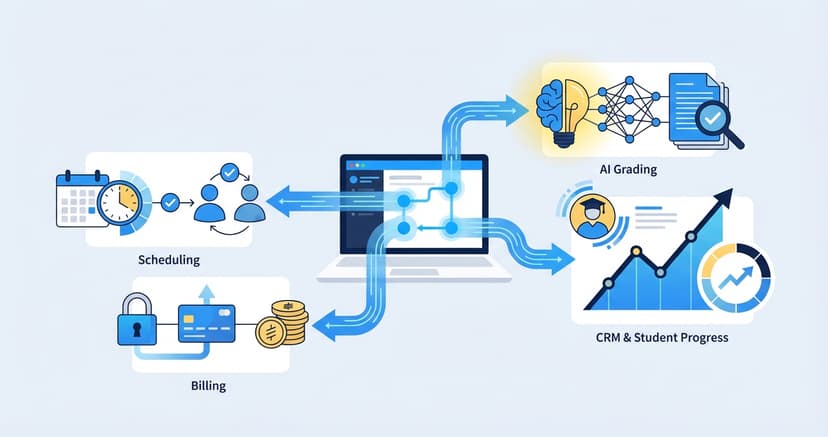
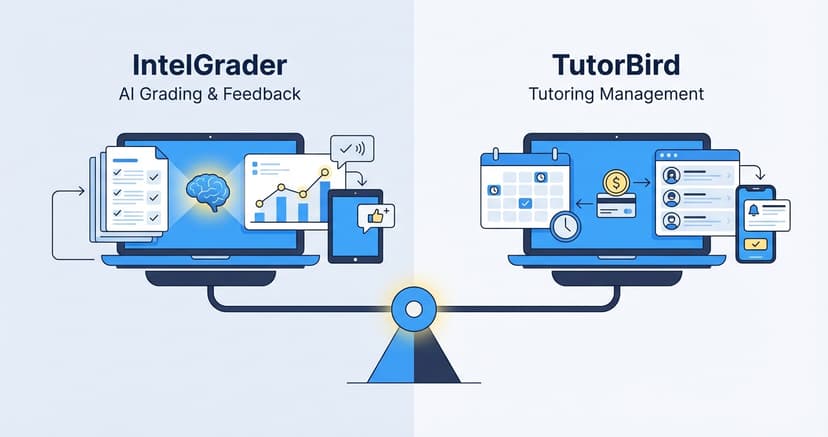
Scheduling and billing software. A platform like TutorBird or Teachworks that handles session booking, student records, invoicing, and payment processing. This is the operational backbone of your center. Budget: $50 to $150 per month. See our comparison of top platforms for a detailed breakdown.
Grading and assessment software. This is the category most new centers overlook — and the one that delivers the highest return on investment. If your center generates a meaningful volume of worksheets (and it should, if your curriculum is built around structured practice), automating the grading process saves an enormous amount of time and delivers better outcomes.
IntelGrader is purpose-built for this use case. It reads and grades handwritten math worksheets using AI, provides instant feedback to students, and generates progress analytics that you can share with parents. For a new center, the ability to show parents data-driven progress reports from day one is a powerful differentiator. Book a demo to see how it fits into your workflow.
Communication tools. Email marketing (Mailchimp or similar), SMS reminders (often built into your scheduling software), and a parent-facing portal for progress updates. Budget: $0 to $50 per month.
When you are learning how to start a tutoring center, it is tempting to defer technology decisions and rely on spreadsheets and manual processes. Resist this temptation. The habits you build in your first months set the pattern for your operation. Starting with the right tools means you scale efficiently instead of drowning in administrative tasks as enrollment grows.
Startup Costs Breakdown

Understanding your financial requirements is essential to planning. Here is a realistic breakdown for three common tutoring center models in 2026.
Model A: Home-Based Center
| Cost Category | Estimated Range |
|---|---|
| Business registration and legal | $500 - $1,000 |
| Insurance | $500 - $1,000/year |
| Furniture and supplies | $1,000 - $2,000 |
| Curriculum materials | $500 - $1,000 |
| Technology (software stack) | $100 - $300/month |
| Marketing (initial) | $1,000 - $2,000 |
| Total startup cost | $3,600 - $7,300 |
Model B: Leased Commercial Space (Small)
| Cost Category | Estimated Range |
|---|---|
| Lease deposit and first month rent | $3,000 - $10,000 |
| Build-out and furnishing | $5,000 - $15,000 |
| Business registration and legal | $1,000 - $2,000 |
| Insurance | $1,000 - $2,000/year |
| Signage | $500 - $2,000 |
| Curriculum materials | $1,000 - $2,000 |
| Technology (software stack) | $150 - $400/month |
| Marketing (initial 3 months) | $3,000 - $6,000 |
| Working capital (3 months operating) | $5,000 - $15,000 |
| Total startup cost | $19,650 - $54,400 |
Model C: Franchise (Kumon, Mathnasium, etc.)
| Cost Category | Estimated Range |
|---|---|
| Franchise fee | $20,000 - $70,000 |
| Build-out and furnishing | $10,000 - $30,000 |
| Initial inventory and materials | $5,000 - $10,000 |
| Marketing (initial) | $5,000 - $15,000 |
| Working capital | $10,000 - $30,000 |
| Total startup cost | $50,000 - $155,000 |
Franchise models include brand recognition and a proven curriculum but come with ongoing royalty fees (typically 8 to 12 percent of revenue) and significant restrictions on how you run your center. Independent centers have lower startup costs and total flexibility but require you to build your brand from scratch.
For most first-time owners learning how to start a tutoring center, Model B — a small leased space — offers the best balance of professionalism, growth potential, and manageable financial risk. Plan to have at least 6 months of operating capital in reserve before opening.
Common Mistakes When Starting a Tutoring Center
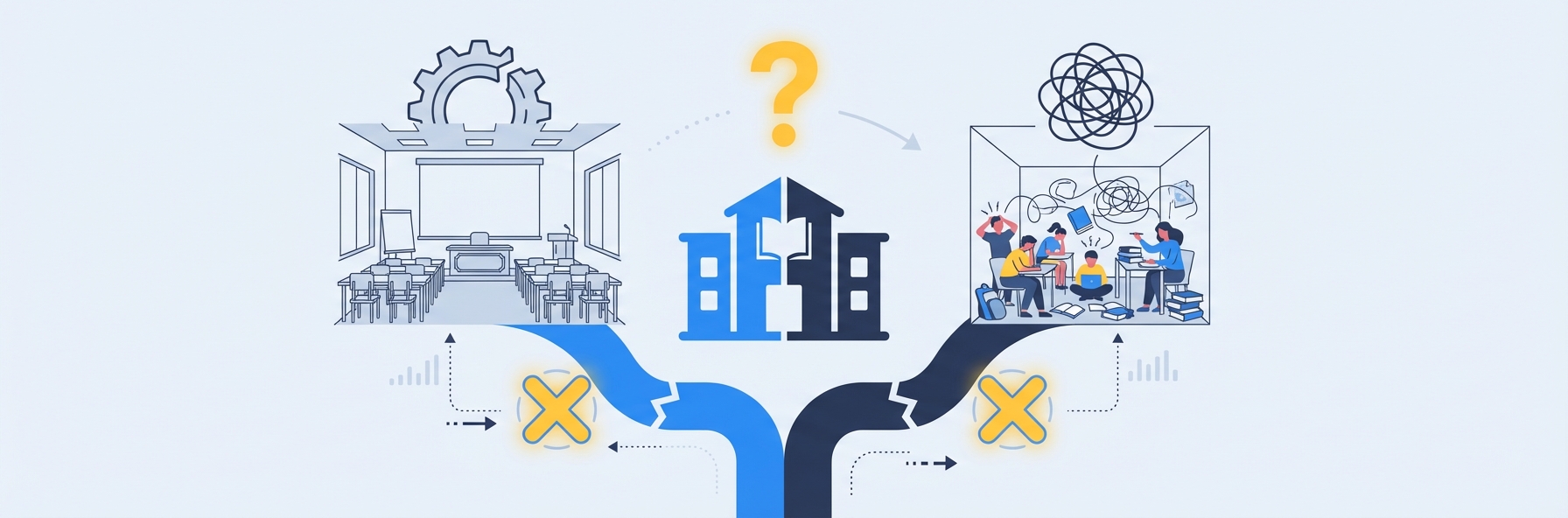
Learning from others' failures is cheaper than making the mistakes yourself. These are the most common pitfalls.
Trying to Teach Everything
New center owners often try to offer too many subjects to attract a broader market. This dilutes your marketing, complicates your curriculum, and makes it harder to build expertise and reputation. Start with one or two subjects. Expand only after you have established a strong reputation and consistent enrollment in your core offerings.
Underpricing Your Services
Many new centers price low to attract families quickly. This creates two problems: low margins that make sustainability difficult, and a perception of lower quality. Parents associate price with value. A center charging $30 per session is perceived differently from one charging $50 per session — and not necessarily in the way you might expect. Price at or slightly above market rate, and justify the premium with measurable outcomes and professional technology.
Neglecting Parent Communication
Your students may be children, but your customers are their parents. Centers that communicate proactively — sharing progress reports, sending session summaries, and providing data on their child's improvement — retain families at dramatically higher rates. Technology makes this easy: AI grading platforms like IntelGrader generate progress data automatically, and scheduling platforms can automate reminder and follow-up emails.
Hiring Too Quickly
Adding tutors before enrollment justifies the expense is a common cash flow mistake. Each tutor you hire represents a fixed cost. Only hire when existing tutors are consistently at or near capacity. Better to have a short waitlist (which creates urgency and social proof) than empty sessions with idle staff.
Skipping Technology
Running on spreadsheets and paper might seem like a way to save money in the early days. In reality, it costs more. Manual grading consumes tutor time that could be spent teaching. Manual progress tracking means you cannot show parents data-driven results. Manual scheduling leads to booking errors and frustrated families. Invest in your technology stack from day one — the costs are modest, and the operational leverage is enormous.
Ignoring Online Reviews
Your Google Business Profile reviews are the most influential factor in a parent's decision to contact you. Actively request reviews from satisfied families. Respond professionally to every review, including negative ones. A center with 20 five-star reviews and thoughtful owner responses will outperform a center with no online presence, regardless of which one is actually a better tutoring operation.
Scaling Your Tutoring Center
Once you have established a profitable single-location center, growth opportunities open up. Here are the most common scaling strategies.
Increase Enrollment at Your Current Location
Before expanding physically, maximize your existing space. Add evening and weekend sessions. Introduce group classes alongside individual tutoring. Offer seasonal intensive programs (summer math camps, SAT boot camps before test dates). Most tutoring centers operate at 50 to 60 percent of their potential capacity — there is usually significant room to grow without moving.
Add Subjects
Once your core subject (typically math) is well-established, add complementary subjects. Reading and writing are natural additions. Science (particularly for AP students) is another high-demand area. Each new subject opens a new marketing channel and a new revenue stream.
Open Additional Locations
Multi-location expansion is the most capital-intensive growth path but offers the highest revenue ceiling. Before opening a second location, make sure your first location is profitable, your operations are systematized, and your technology stack can scale. One of the major advantages of AI-powered grading is that it scales effortlessly — grading 500 worksheets per week costs the same in tutor time as grading 50, because the AI handles the work.
Offer Online and Hybrid Programs
Adding an online tutoring option extends your geographic reach beyond your immediate area. Hybrid models — where students attend in-person sessions but can also complete practice worksheets at home with AI grading and instant feedback — are increasingly popular with families. This is another area where technology like IntelGrader creates a competitive advantage: students can practice at home, submit worksheets via phone, and receive graded feedback immediately, without waiting for the next in-person session.
License Your Curriculum
If you develop a proprietary curriculum or methodology that produces strong results, licensing it to other tutoring centers is a high-margin growth path. Document your processes, systematize your approach, and explore licensing partnerships.
The Technology Stack for a Modern Tutoring Center
Technology is the foundation that enables every aspect of a successful tutoring center. Here is the complete technology stack for a center in 2026.
Essential Tools
| Category | Recommended Tools | Monthly Cost |
|---|---|---|
| Scheduling and billing | TutorBird, Teachworks, or Oases | $50 - $200 |
| Grading and assessment | IntelGrader | Book a demo for pricing |
| Communication | Mailchimp (email), built-in SMS | $0 - $50 |
| Website | Squarespace, Wix, or WordPress | $15 - $50 |
| Accounting | QuickBooks or Wave | $0 - $30 |
| Total monthly technology cost | $65 - $330 |
Why AI Grading Is the Highest-Impact Investment
If you take one piece of advice from this guide on how to start a tutoring center, let it be this: automate your grading from day one.
Here is the math. A center with 40 active students generating 2 worksheets per student per week produces 80 worksheets weekly. Manual grading takes approximately 3 to 5 minutes per worksheet. That is 4 to 7 hours per week of tutor time spent grading — or $80 to $210 per week at $20 to $30 per hour.
Over the course of a year, that is $4,000 to $11,000 in tutor time spent on a task that AI can handle in minutes. And that calculation does not account for the value of what tutors could be doing instead: teaching more students, providing one-on-one attention, calling parents, or planning lessons.
AI-powered grading tools like IntelGrader also deliver something manual grading cannot: instant, personalized feedback for every student on every worksheet. Students learn more when they receive feedback immediately, while the problems are still fresh in their minds. A worksheet graded three days after it was completed has a fraction of the learning impact of one graded in three minutes.
For a deeper look at how AI grading works for handwritten math, see our guide to AI grading for handwritten math.
Frequently Asked Questions
How much money do I need to start a tutoring center?
Startup costs range from $3,600 to $7,300 for a home-based center, $15,000 to $55,000 for a small leased commercial space, and $50,000 to $155,000 for a franchise. The leased commercial space model offers the best balance of professionalism and affordability for most first-time owners. Plan to have at least 6 months of operating expenses in reserve beyond your initial startup costs. If you are bootstrapping, starting from a home-based or shared space model and graduating to a commercial lease once enrollment supports it is a prudent approach.
How many students do I need to break even?
It depends on your pricing, overhead, and operating model. A rough benchmark: a center with $3,000 per month in fixed costs (rent, insurance, software, marketing) and an average revenue of $100 per student per month needs 30 active students to break even. Centers charging $300 to $400 per month per student can reach breakeven with as few as 10 to 15 students. Build a detailed financial model for your specific situation, accounting for tutor wages, materials, and all technology costs.
Do I need a teaching certification to open a tutoring center?
In most US states, no. Tutoring centers are generally classified as private businesses, not educational institutions, and do not require the owner or staff to hold teaching certifications. However, having certified teachers on staff significantly boosts credibility with parents. Some states have specific requirements for centers that serve students with disabilities or receive public funding — check your state's department of education for details.
How long does it take to become profitable?
Most tutoring centers reach breakeven within 6 to 12 months of opening. Profitability depends on how quickly you can build enrollment, which is driven by your marketing effectiveness, location, and the quality of your offering. Centers that differentiate through technology — particularly those that can show parents measurable student progress through tools like IntelGrader — tend to build enrollment faster because satisfied parents become active referral sources.
Should I open an independent center or buy a franchise?
Both paths have merit. Franchises (Kumon, Mathnasium, Sylvan, etc.) provide brand recognition, a proven curriculum, and operational playbooks. In exchange, you pay substantial franchise fees ($20,000 to $70,000 upfront), ongoing royalties (8 to 12 percent of revenue), and accept significant restrictions on how you run your center — including the technology you use and the prices you charge. Independent centers require you to build everything yourself but offer complete flexibility, lower startup costs, and higher long-term margins. If you are confident in your ability to market, build curriculum, and manage operations, an independent center typically offers better economics. If you prefer a turnkey system and are willing to pay for it, a franchise reduces your risk.
Your Next Steps
Learning how to start a tutoring center is the first step. Executing is the second. Here is a condensed action plan:
- Month 1: Write your business plan. Register your business. Secure insurance. Research locations.
- Month 2: Sign a lease or prepare your home-based space. Design your curriculum. Set up your technology stack — scheduling software, IntelGrader for grading, and a basic website.
- Month 3: Hire your first tutor. Set your pricing. Launch your Google Business Profile and initial marketing campaigns.
- Month 4: Open for trial sessions. Begin enrolling students. Activate your referral program.
- Months 5-6: Optimize your operations based on real experience. Adjust marketing spend toward the channels that generate actual enrollments. Share progress data with parents to drive referrals and retention.
The US tutoring market is large, growing, and full of opportunity for operators who combine great teaching with modern technology. The centers that invest in the right foundation — a strong curriculum, qualified tutors, and an efficient technology stack — are the ones that grow into sustainable, profitable businesses.
Ready to build AI-powered grading into your new tutoring center from day one? Book a demo with IntelGrader to see how it works.
Sources
- National Center for Education Statistics. "National Assessment of Educational Progress (NAEP) Results." NCES, US Department of Education, 2024.
- IBISWorld. "Tutoring & Test Prep Industry in the US - Market Research Report." IBISWorld Industry Reports, 2025.
- Franchise Business Review. "Tutoring Franchise Industry Report." FBR, 2025.
- Grand View Research. "US Private Tutoring Market Size & Trends Analysis Report." Grand View Research, 2025.
- US Small Business Administration. "Starting a Business Checklist." SBA.gov, 2025.
Ready to transform your grading?
See how IntelGrader can save your tutoring centre 10+ hours per week with AI-powered grading.