Discover ai based exam evaluation: A Smart Way to Assess Now
That mountain of answer sheets after a mock test. You know the one. It sits on your desk for days, sometimes weeks. Grading is slow, tiring, and eats into your real teaching time. What if you could clear it in an afternoon? That's what ai based exam evaluation can do. It's like a smart helper that does the boring grading work so you can focus on your students.
Quick Summary
- AI grading checks papers up to 70% faster, giving you more free time.
- It gives fair marks to every single student, every time. No bias.
- You get clear reports to see where students are stuck and help them get better.
Key facts at a glance
- AI grading can cut down the time it takes to check long answers by up to 70%.
- Our AI grades essays with over 85% agreement with human teachers.
- The use of AI for checking exams in India is growing by 25% every year.
- AI can check about 1,000 multiple-choice questions in one minute. Much faster than by hand.
- In a 2026 survey, over 60% of teachers said they want to use AI tools to make checking papers easier.
- AI tools that check for plagiarism can spot cheating with 98% accuracy.
Pro tip
AI grading saves a lot of time on checking long answers. This lets you focus more on actual teaching. See how AI handles CBSE OSM.
What is AI based exam evaluation and how does it work?
AI based exam evaluation uses smart tech to read, understand, and grade student answers. It's like a human teacher, but it works thousands of times faster. It doesn't just look for keywords. It understands the main idea and structure of a student's answer. It's built to think like a good teacher when it grades.
Think of it as a super-fast teaching assistant who never gets tired. The whole process is simple and works for both online tests and paper answer sheets. Here’s how it works, step-by-step:
- Scanning: Paper answer sheets are scanned to make a digital copy. If the exam was online, you skip this step.
- Reading the Paper: Special tech reads the handwriting and typed text from the scanned image and turns it into data the computer can read.
- The Smart Part: This is where the magic happens. The system uses Natural Language Processing (NLP) to understand what the words mean. It checks the student's answer against a model answer or marking scheme that you give it.
- Giving Marks & Tips: The AI gives a score based on the marking scheme. It can also point out what the student did well and where they need to improve. This gives instant, helpful feedback to every student.
This whole process for an ai based exam evaluation can take less than a minute for one paper. A teacher might take 10-15 minutes to do the same job.
Why should educators consider AI for exam assessment now?
You should think about AI in education assessment now because it saves a lot of time. It also fits with new school policies and gives you better info on how your students are doing. The pressure on coaching centres for big exams like JEE and NEET is huge. You have to give lots of mock tests, and checking them all is a real headache. Making students wait two weeks for marks just doesn't work anymore.
The Indian education system is changing, too. The National Education Policy (NEP) 2020 wants to test real skills, not just what students have memorised. An ai based exam evaluation system is great for this because it can track skills over many tests. Plus, with CBSE making On-Screen Marking for Class 12 exams from 2026 a rule, everyone is moving to digital checking. Using this tech now puts you ahead of others.
Pro tip
For competitive exams like JEE and NEET, checking each step in practice test answers can give you a better idea of what students understand. Improve JEE NEET practice.
Here are the main reasons to switch:
- Save Tons of Time: Cut your grading work by up to 70%. Use that time to help students one-on-one or make better study materials.
- Keep Up with New Rules: Match your coaching centre with new rules like NEP 2026 and the new CBSE digital checking system.
- Get Ahead of Others: Give faster results and better performance reports than other tuition centres.
- Get Clear Info: Stop guessing where students are having trouble. Get exact data on which topics or types of questions are hard for your class.
- Always Fair: No more "tired grader" mistakes. The 100th paper is checked with the same care and fairness as the first.
How does AI grading compare to traditional manual marking methods?

AI grading is much faster, fairer, and gives you more detailed reports than checking by hand. Manual marking is often slow and can be subjective. While a teacher's gut feeling is great, checking by hand can be affected by tiredness, personal bias, or simple human mistakes. An ai based exam evaluation system gets rid of these problems.
Let’s be honest. We’ve all had days where we might grade a bit harder on a Monday morning than on a Friday afternoon. AI doesn't have good or bad days. It just follows the rules you give it. This makes grading much fairer, and students will trust the results more.
Here’s a simple comparison:
| Feature | Manual Marking | AI Based Exam Evaluation |
|---|---|---|
| Speed | 10-20 mins per long paper | Under 1 minute per paper |
| Consistency | Changes based on mood, time | 100% fair for all papers |
| Bias | Can be biased by things like handwriting | No bias, just checks the answer |
| Feedback | Short, general comments | Clear tips for each point |
| Data Analytics | Hard to see class problems | Instant reports on students and topics |
| Scalability | Checking 500 papers is a huge job | Checking 500 is as easy as 50 |
This isn't about replacing teachers. It's about giving them superpowers. You can let the machine do 80% of the repetitive work. Then you can use your skills for the 20% that needs a human touch, like mentoring students.
Ready to see how this works for your centre? Book a quick demo of IntelGrader and we'll show you in 15 minutes.
Can AI effectively check and evaluate various types of exam papers?
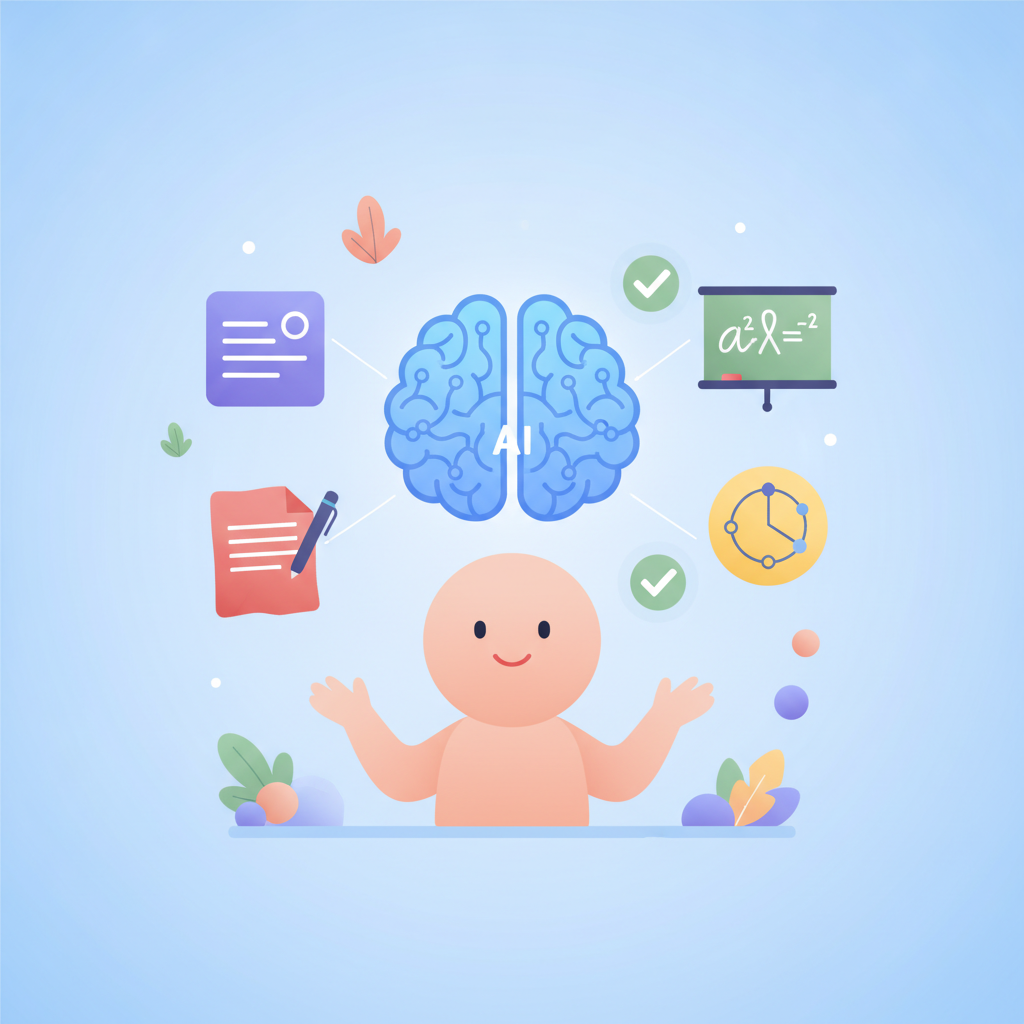
Yes, AI can check all kinds of exam papers. It can handle simple multiple-choice questions (MCQs) and also long, detailed answers. Today's AI grading software does more than just look for keywords. It can understand the main idea, how an answer is laid out, and even the steps in a maths problem.
For coaching centres that prepare students for boards like CBSE and ICSE or other big exams, this is really useful. You don't just test one kind of knowledge. You need a system that can handle all the types of questions your students will see.
Pro tip
For UPSC Mains answers, AI can help give feedback that is fast and fair every time. Evaluate UPSC Mains answers.
Here’s what today's AI tools for exam assessment can handle:
- Objective Questions: This is the easy part. MCQs, fill-in-the-blanks, and true/false questions are graded right away with 100% accuracy.
- Short Answer Questions (SAQs): The AI checks for the main points and if the answer makes sense. You can set up many different right answers.
- Long Answer Questions (LAQs) / Essays: This is where AI is really smart. It checks the answer against your marking scheme. It looks for a clear main point, good reasons, examples, and a conclusion. It's a perfect tool for an ai based exam evaluation in subjects like History, English, or Biology.
- Mathematical Problems: The AI can check each step in a solution. It can give part marks if the method is right, even if the final answer is wrong.
- Diagrams and Graphs: Some systems can even check labelled diagrams. They make sure all the parts are there and in the right place.
The system learns from you. You grade a few papers by hand to "teach" the AI what a 5/5 or a 3/5 answer looks like. After that, it uses that same logic for the rest of the papers, super fast and with no mistakes.
What are the key benefits and challenges of implementing AI in exam evaluation?
The best parts are speed, fairness, and getting real info on your students. The tricky parts are getting started, teaching the AI, and making sure it understands tough answers. No tech is perfect, and it's good to know the pros and cons before you jump in. The good news is that the tricky parts are getting easier to handle every year.
If this was useful, read this next:
The Upside: The Benefits of AI Exam Evaluation
The good things about AI grading are huge and fix the biggest problems for most coaching and tuition centres.
- Super Fast: Grade a whole batch's mock test in a few hours, not weeks. This means you can test more often and give feedback faster.
- Fair and Unbiased Grading: Every student's paper is checked using the exact same rules. This gets rid of any human bias and makes the grades fairer.
- Useful Reports: This is a big one. An automated exam evaluation system gives you a report that shows which questions were the hardest, what topics the class struggled with, and how each student is doing over time. It turns a test into a great tool for understanding your students.
- Saves Money (for big batches): There's a cost to get started, but you save so much money on teacher time in the long run. This is especially true for centres with hundreds of students.
- Students Learn Better: When students get fast, detailed feedback, they learn better. They can quickly see what they did wrong and what they need to fix for the next test.
The Hurdles: Challenges to Consider
It's also smart to know about the problems you might face.
- Getting Started: You'll need to scan your papers. More importantly, you have to train the AI by giving it your marking rules and a few sample graded answers. This first step is important for getting accurate grades.
- Creative Answers: For subjects like literature, where answers can be very creative and personal, the AI might not get all the fine points. In these cases, it's best to have a teacher review the AI's work.
- Getting Everyone on Board: Some teachers might not trust a computer to grade their students' work. You need to explain that it's a tool to help them, not replace them.
- Software Cost: Good AI grading software costs money. But the time you save and the better results you get usually make it worth the price.
Honestly, the biggest challenge is just getting started. Once you see how it works, the benefits are very clear.
How can institutions ensure fairness and accuracy with AI-powered assessments?
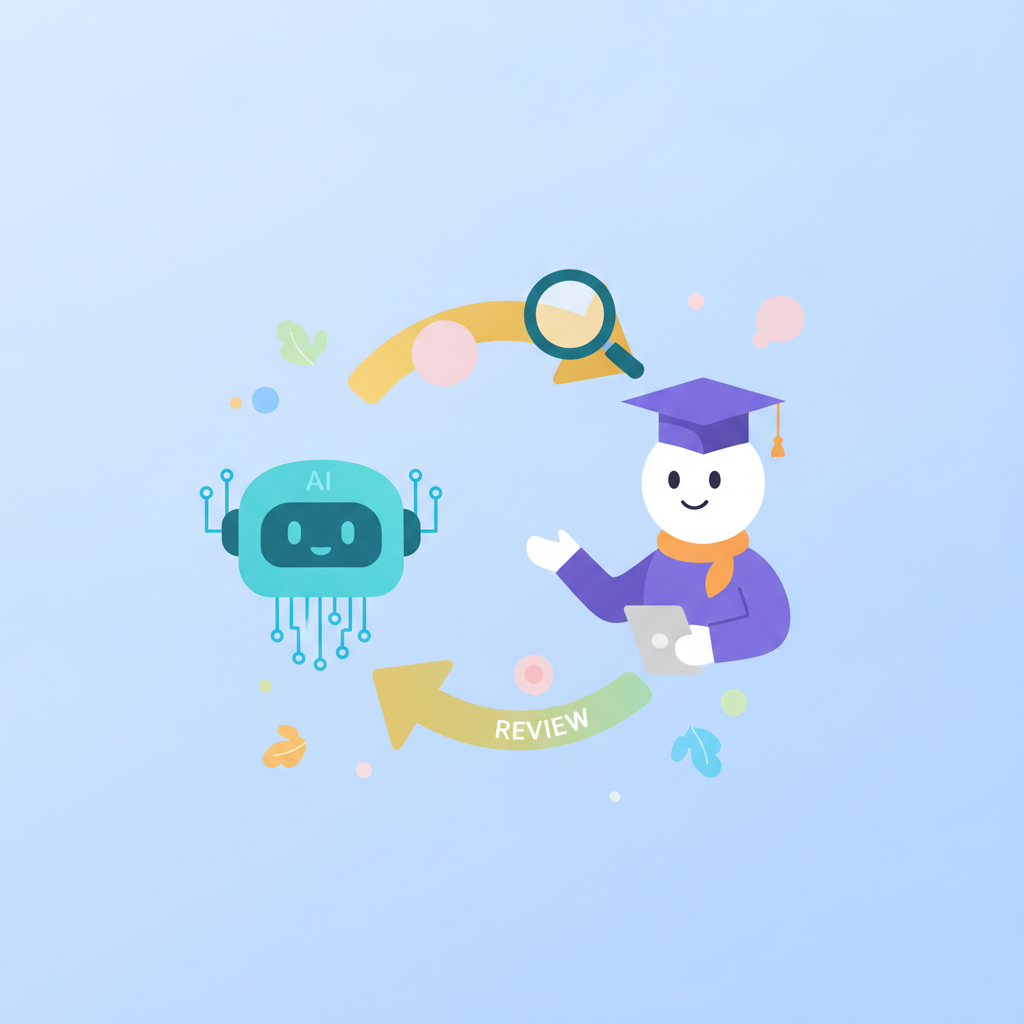
Schools can make sure AI grading is fair by having a teacher check some papers, testing the AI often, and telling students how it works. Trust is everything in education. You need to be sure that the marks from an AI powered exam grading system are fair and correct.
The goal isn't to have a "black box" that just gives out numbers. The goal is to build an automated exam evaluation process that everyone—teachers, students, and parents—can trust.
Here are the simple steps to do that:
- Have a Teacher in Charge: This is the best way. Let the AI do most of the work by grading 90% of the answers. It can flag any answers it's not sure about for a human teacher to check. You can also have teachers check a random 5-10% of all papers to make sure everything is okay. This gives you the speed of AI and the smarts of a human.
- Make a Clear Marking Scheme: The AI is only as good as the rules you give it. A clear, detailed marking scheme is the key to an accurate ai based exam evaluation.
- Check the AI's Work: Before grading a big batch of papers, test the AI on a small set graded by your best teachers. From time to time, compare the AI's marks with a human's marks on the same papers to see if it's still accurate.
- Be Open About It: Tell your students and their parents how the checking process works. Explain that it’s a tool to give them faster and more consistent feedback. When people understand how it works, they are more likely to trust it.
What are the different types of evaluation and AI relevant to education?
In schools, we check students in four main ways. And there are four main kinds of AI. Knowing these helps you see where AI in education assessment fits in.
The 4 Types of Evaluation in Education
These are the main ways teachers measure learning. An ai based exam evaluation system can help with all of them.
- Diagnostic Evaluation: Done before teaching to see what a student already knows. Like a pre-test before a new chapter.
- Formative Evaluation: Happens during learning. These are small tests like quizzes to check progress and give feedback. AI is great for this because it's so fast.
- Summative Evaluation: Happens at the end of a topic to see what a student has learned. Final exams, board mock tests (for CBSE/ICSE), and big mock exams (JEE/NEET) are examples.
- Placement Evaluation: Used to put students into the right class or level for their skills.
The 4 Types of AI
AI seems like one big thing, but it's good to know the different kinds.
- Reactive Machines: The most basic kind. It can't remember things from the past. Think of an old chess computer.
- Limited Memory: This is where most modern AI, including AI grading software, fits. It can use past information to make decisions. It learns from the data you give it (your sample graded papers) to grade new papers.
- Theory of Mind: A future type of AI that could understand human feelings and thoughts. This is still being researched.
- Self-Awareness: The kind of AI you see in movies that can think for itself. We are a very, very long way from this.
For now, the future of exam evaluation with AI is all about strong Limited Memory systems. They are great at learning patterns and using them over and over again for lots of papers.
How can students prepare to pass an AI assessment effectively?
Students can do well on an AI-checked test by writing clearly, sticking to the point, using keywords from class, and having a clear structure. An AI grader isn't looking for fancy writing. It's looking for proof that you understand the topic. The good news is, the skills you need for an AI-graded test are the same ones you need for a human-graded one.
Here are some simple tips you can give your students:
- Just answer the question: This is the most important tip. The AI is trained to follow the marking rules. If the question asks for three things, the AI will look for three things. Writing about something else won't get you marks.
- Use the right words: Use the special terms you learned in class. If you're talking about photosynthesis, use words like "chlorophyll" and "carbon dioxide." This shows the AI (and a human teacher) that you know your stuff.
- Give your answer a structure: For long questions, a clear structure helps. Start with a short intro, use different paragraphs for each main point, and end with a short conclusion. This makes it easy for the AI to see your points.
- Write neatly: If the exam is on paper and will be scanned, good handwriting is important. If the computer can't read a word, the AI can't grade it. This isn't a problem for online exams.
- Follow the rules: Pay attention to things like word limits. If the instructions say "explain in 100 words," try to stick to that.
Ready to Stop Drowning in Paperwork?
You became a teacher to help students, not to spend your weekends with a red pen. An ai based exam evaluation system like IntelGrader can give you your time back. It can also give your students the fast, fair, and detailed feedback they need to do well.
Stop the grading grind. Start making a bigger difference.
See IntelGrader in Action – Book Your Free Demo Today
Frequently Asked Questions
What is an AI evaluation?
It's when a computer program automatically checks and grades student work, like exam papers. It uses smart tech to read answers, compare them to a marking scheme, and give marks quickly and fairly.
Can AI be detected in written exams?
This question is usually about students using AI to write answers. And yes, special tools can often spot AI-written text. But when teachers use AI to grade papers, it's just a tool they choose to use openly.
How to pass an AI assessment?
To do well, write clear and structured answers. Answer the question directly, use keywords from your subject, and if it's a paper test, make sure your handwriting is easy to read.
Can AI check exam papers?
Yes, absolutely. AI is very good at checking exam papers, including multiple-choice, short answers, and even long essays. Modern ai based exam evaluation systems can understand the main idea of an answer, making them great for many subjects.
What are the 4 types of evaluation?
The four main types of evaluation in schools are:
- Diagnostic: Checks what a student knows before teaching.
- Formative: Checks progress during a course.
- Summative: Measures what a student has learned at the end.
- Placement: Puts a student in the right course or level.
What are the 4 types of AI?
The four main types of AI are:
- Reactive Machines: Basic AI that can't learn from the past.
- Limited Memory: Modern AI that learns from data. This is used for grading.
- Theory of Mind: Future AI that might understand human thoughts.
- Self-Awareness: Sci-fi AI that has its own consciousness.
Ready to transform your grading?
See how IntelGrader can save your tutoring centre 10+ hours per week with AI-powered grading.