
AI Grading Coaching Centres India Guide
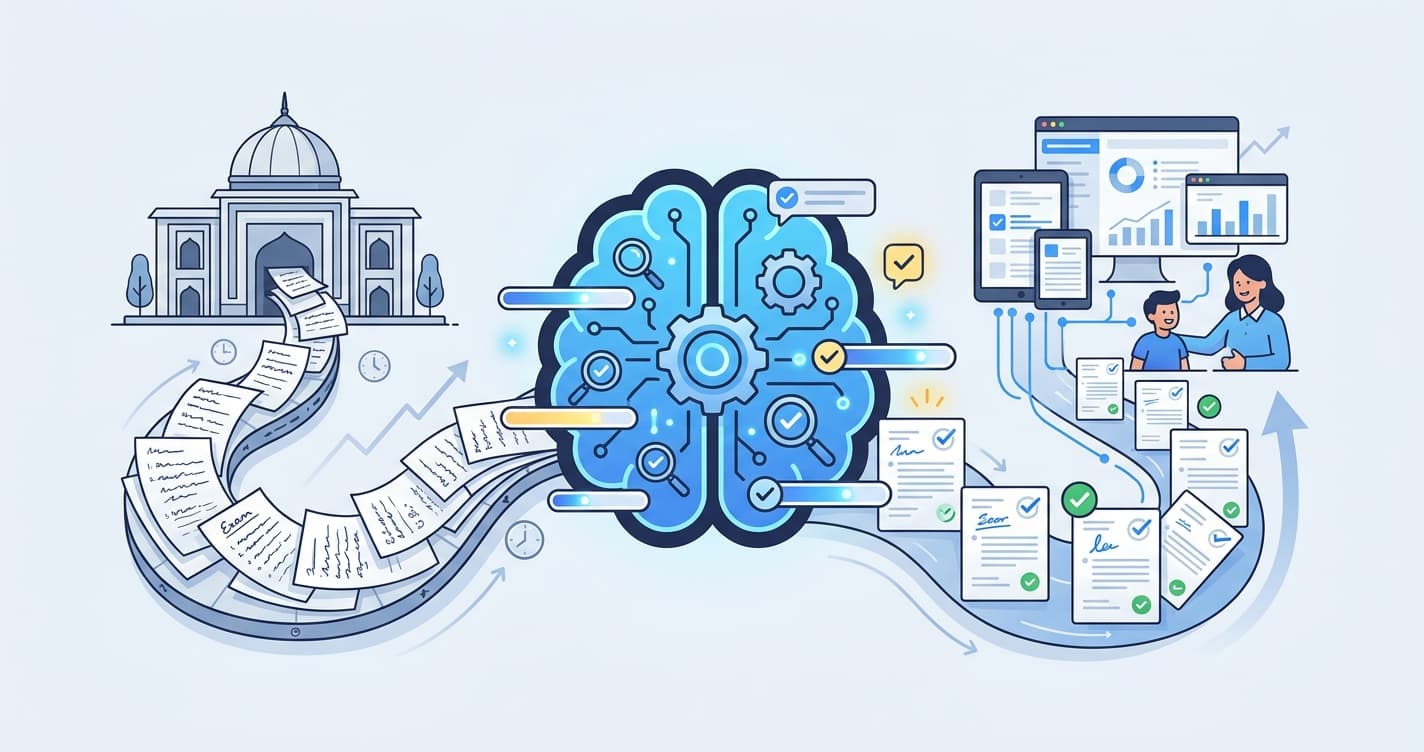
Because teams search for ai grading coaching centres india, this guide keeps the workflow practical. It explains where AI helps, what teachers should review, and how to turn scoring into better student feedback.
Are you an educator or administrator at a coaching or tuition centre in India, constantly battling the monumental task of grading thousands of papers weekly? The traditional, manual grading process is not just time-consuming and prone to inconsistencies, but it also saps valuable teacher energy that could be better spent on actual teaching and student interaction. This is where AI grading for coaching centres in India emerges as a game-changer, offering a powerful solution to streamline evaluations, provide deeper insights, and ultimately enhance student outcomes.
The Grading Burden: Why Indian Coaching Centres Need a Smarter Solution
India's competitive education landscape, especially for exams like JEE, NEET, UPSC, CBSE, and ICSE boards, places immense pressure on students and, consequently, on the coaching centres that prepare them. These centres often manage hundreds, if not thousands, of students across multiple batches, each submitting numerous assignments, mock tests, and practice papers every week. The sheer volume of papers that require grading is staggering.
Manual grading, while traditional, comes with a host of challenges:
- Time Consumption: Teachers spend countless hours, often late into the night, meticulously checking papers. This time could be redirected towards lesson planning, one-on-one student counselling, or professional development.
- Inconsistency and Subjectivity: Human graders, despite their best efforts, can exhibit variability in marking. Fatigue, personal biases, or differing interpretations of rubrics can lead to inconsistent scores, which can be demotivating for students and erode trust in the evaluation process.
- Delayed Feedback: The time taken for manual grading often means students receive feedback days, sometimes weeks, after submitting their papers. This delay diminishes the effectiveness of the feedback, as students may have moved on from the concepts tested.
- Teacher Burnout: The repetitive and laborious nature of manual grading contributes significantly to teacher stress and burnout, impacting their overall well-being and teaching quality.
- Lack of Granular Insights: Traditional grading primarily focuses on assigning a score. It rarely provides deep, actionable insights into why a student made specific errors, what conceptual gaps exist, or how their performance trends over time across different topics.
In this high-stakes environment, the need for a more efficient, accurate, and insightful evaluation system is not just a convenience but a strategic imperative. This is precisely where AI grading for coaching centres in India steps in, offering a robust alternative that addresses these pain points head-on.
How AI Grading Transforms Assessment for Indian Educators
AI grading isn't just about automating the marking of multiple-choice questions; it's a sophisticated technology designed to understand and evaluate subjective answers with remarkable precision, mirroring and often exceeding human capabilities. For tutoring and coaching centres, this means a paradigm shift in how assessments are handled.
Here’s how AI grading, particularly platforms like IntelGrader, is revolutionising the process:
- Unprecedented Speed and Efficiency: Imagine grading 50 subjective papers in just 30 minutes. AI algorithms can process vast amounts of data almost instantaneously, drastically cutting down the time spent on evaluation from hours to mere minutes. This speed ensures students receive timely feedback, reinforcing their learning cycle.
- Consistent and Unbiased Evaluation: AI systems are programmed with predefined rubrics and marking schemes, ensuring every student's paper is evaluated against the exact same criteria without any human bias or fatigue. This guarantees fairness and consistency across all assessments, building greater trust in the evaluation process.
- Concept-Level Mapping: Beyond just checking if an answer is right or wrong, IntelGrader's AI can map student responses to specific concepts. For example, in a Physics problem, it can identify if a student understood the principle of conservation of energy but struggled with vector addition, providing a detailed breakdown of conceptual strengths and weaknesses.
- Formula-Level Error Analysis: Especially crucial for subjects like Mathematics and Science, our AI can pinpoint not just that an answer is incorrect, but where in the formula or derivation the error occurred. Did they use the wrong formula? Was there a calculation mistake? This level of detail is invaluable for targeted intervention.
- High Accuracy Rates: With advanced machine learning models trained on millions of data points, AI grading platforms boast accuracy rates exceeding 95%, making them highly reliable for both objective and subjective assessments.
Ready to save hours on grading? Book a free demo
Beyond Marks: Deep Learning Insights with AI-Powered Evaluation
The traditional focus on just a final score often misses the deeper narrative of a student's learning journey. In the context of NEP 2026's emphasis on competency-based assessment and moving beyond rote learning, AI grading provides a powerful tool for educators to truly understand student comprehension. It’s not just about what score a student got, but why they got it and how they can improve.
IntelGrader's AI goes beyond superficial marking to deliver truly actionable insights:
- Identification of Learning Gaps: By analysing errors at a granular level (concept, sub-topic, and even formula), the AI can precisely identify areas where a student is struggling. For instance, if multiple students consistently make errors in quadratic equations, the system flags this as a potential area for re-teaching or additional practice.
- Creation of Individual Learning Trajectories: Based on continuous assessment data, the AI can help construct a personalised learning path for each student. This trajectory highlights their progress, identifies persistent challenges, and suggests specific resources or topics for improvement, empowering tutors to offer truly individualised guidance.
- Performance Trends and Growth: AI systems track student performance over time, providing visual dashboards that illustrate growth in specific subjects or topics. This longitudinal data helps students see their progress and motivates them, while also allowing educators to assess the effectiveness of their teaching methodologies.
- Alignment with NEP 2020 Goals: The National Education Policy 2026 advocates for a shift from summative assessments that test rote memorisation to formative assessments that evaluate higher-order thinking skills, critical analysis, and conceptual understanding. AI grading, with its ability to analyse complex subjective answers and provide competency-based feedback, perfectly aligns with these progressive educational goals. It encourages students to think critically rather than just recall facts.
- Personalised Feedback Generation: Instead of generic comments, AI can generate specific, constructive feedback tailored to each student's mistakes. This targeted feedback is crucial for effective learning, guiding students on how to correct their errors and deepen their understanding.
This depth of insight empowers educators to move beyond simply grading papers to actively shaping learning outcomes. It allows them to understand not just who is struggling, but what they are struggling with, and how best to support them.
Navigating the Future: AI Grading, NEP 2020, and CBSE's Digital Mandate
The Indian education system is undergoing a significant transformation, driven by policies like NEP 2020 and technological advancements. Coaching centres, as key pillars of exam preparation, must adapt to these changes to remain effective and competitive. AI grading is not just a tool for efficiency; it's a strategic investment in the future of education.
1. Embracing NEP 2020's Competency-Based Assessment:
NEP 2020 is a landmark policy aiming to overhaul the education system, shifting the focus from rote learning to holistic development, critical thinking, and competency-based assessment. This means evaluating students based on their ability to apply knowledge, solve problems, and demonstrate understanding, rather than just memorising facts.
- How AI Supports NEP 2020: AI grading platforms like IntelGrader are uniquely positioned to support this shift. By analysing subjective answers for conceptual understanding, problem-solving approaches, and application of principles, AI can provide granular data on a student's competencies. It moves beyond a simple 'right' or 'wrong' to assess the depth of understanding, identifying specific skills that need development.
- Fostering Higher-Order Thinking: When students know their answers will be evaluated for conceptual clarity and problem-solving methodology, rather than just keywords, it encourages them to develop higher-order thinking skills, aligning perfectly with NEP 2020's vision.
2. Preparing for CBSE's On-Screen Marking (OSM) Mandate (2026):
In a major move towards digital transformation, CBSE has announced that from 2026, Class 12 board exams will be evaluated using On-Screen Marking (OSM). This means examiners will grade scanned answer sheets digitally, rather than physical copies. This mandate signals a clear direction towards digitisation in the assessment process.
- AI Grading as a Precursor: For coaching centres, adopting AI grading now is not just about current efficiency but also about future readiness. It familiarises students and educators with digital assessment environments, making the transition to CBSE's OSM mandate smoother. Students who are used to receiving detailed, digitally-generated feedback will be better prepared for a digitally-evaluated board exam.
- Seamless Digital Workflow: IntelGrader integrates seamlessly into a digital workflow, from scanning student answer sheets to generating reports. This mirrors the digital evaluation process that CBSE is implementing, providing invaluable experience for both students and centres.
3. Staying Ahead in a Competitive Landscape:
In a market saturated with coaching centres, those that embrace technology for better student outcomes will stand out. Offering faster, more detailed, and consistent feedback through AI grading demonstrates a commitment to innovation and student success, attracting more students and building a stronger reputation.
By embracing AI grading, Indian coaching centres can not only streamline their operations but also proactively align with the evolving educational landscape, ensuring their students are well-prepared for both current challenges and future changes in the examination system.
Real-World Impact: Saving Time, Boosting Performance, and Scaling Operations
The theoretical benefits of AI grading translate into tangible, measurable improvements for coaching centres across India. The impact extends beyond just saving time on grading; it fundamentally transforms the operational efficiency and pedagogical effectiveness of the institution.
Significant Time Savings: The most immediate and apparent benefit is the drastic reduction in grading time. Coaching centres using IntelGrader report saving 10+ hours per week per teacher on grading alone. This freed-up time can be reallocated to more impactful activities, such as:
- Developing new curriculum modules.
- Conducting extra doubt-clearing sessions.
- Providing individual mentorship to students.
- Engaging in professional development.
- Reducing teacher workload and preventing burnout.
Enhanced Student Performance: With timely, consistent, and highly detailed feedback, students can quickly understand their mistakes, rectify them, and reinforce their learning. This iterative process of assessment and targeted feedback is proven to accelerate learning and improve overall academic performance. Studies show students who receive specific, timely feedback perform significantly better on subsequent assessments.
Improved Pedagogical Effectiveness: Teachers gain access to unprecedented data about their students' learning. Institutional analytics provided by platforms like IntelGrader allow multi-batch centres to:
- Identify common misconceptions across an entire batch or even multiple batches.
- Pinpoint areas of the curriculum that might need revision or more emphasis.
- Track the effectiveness of different teaching strategies.
- Make data-driven decisions to optimize curriculum and instruction for better results.
Scalability for Growing Centres: As coaching centres expand, the challenge of managing increasing student numbers and corresponding assessment volumes becomes immense. AI grading provides a scalable solution, allowing centres to handle hundreds or thousands of students without proportionally increasing their grading workforce. This enables sustainable growth and expansion into new markets or courses.
Better Parent-Teacher Communication: The detailed reports generated by AI grading systems provide concrete data points for parent-teacher meetings. Instead of vague observations, educators can present clear evidence of a student's progress, strengths, and areas needing attention, fostering more productive conversations and stronger parental engagement.
Competitive Advantage: In a highly competitive market, centres that leverage advanced technology like AI grading demonstrate innovation and a commitment to student success. This can be a significant differentiator, attracting more students and establishing the centre as a leader in modern education.
By integrating AI grading, coaching centres are not just adopting a new tool; they are investing in a future where education is more efficient, insightful, and ultimately, more effective for every student.
Frequently Asked Questions about AI Grading for Coaching Centres in India
How does AI grading handle subjective answers and diagrams?
Modern AI grading systems, like IntelGrader, employ advanced Natural Language Processing (NLP) and Optical Character Recognition (OCR) technologies to understand and evaluate subjective answers. For diagrams, image recognition and deep learning models are used to assess correctness, label accuracy, and adherence to specific criteria. Our AI is trained on vast datasets, allowing it to interpret context, identify key concepts, and even detect common misconceptions in free-form text and visual representations, providing detailed feedback beyond just a score.
What kind of papers can AI grade?
IntelGrader can grade a wide range of paper types, including multiple-choice questions (MCQs), fill-in-the-blanks, short answer questions, long answer questions, essays, mathematical derivations, science diagrams, and even coding assignments. Our platform is versatile enough to handle various subjects like Mathematics, Physics, Chemistry, Biology, English, History, and more, adapting to the specific requirements of CBSE, ICSE, JEE, NEET, and other competitive exams.
How accurate is AI grading compared to human graders?
IntelGrader boasts an accuracy rate of over 95%, often matching or exceeding human consistency, especially when dealing with large volumes. AI eliminates human factors like fatigue or unconscious bias, ensuring every paper is graded against the exact same rubric. While human oversight is always recommended for complex, nuanced evaluations, AI provides a highly reliable first pass and identifies areas for human review, significantly enhancing overall accuracy and consistency.
Is AI grading suitable for all subjects, including complex ones like English literature or advanced Mathematics?
Yes, AI grading has evolved to handle a wide array of subjects. For English literature, it can assess grammar, syntax, coherence, and even thematic understanding based on trained models. For advanced Mathematics, it can verify steps, formula application, and logical progression, not just the final answer. While some highly subjective or creative tasks might still benefit from human nuance, AI provides a robust foundation for evaluation across virtually all academic disciplines, offering concept-level and formula-level error analysis.
What are the cost benefits for coaching centres in India?
The cost benefits are substantial. By saving 10+ hours per week per teacher, centres can reallocate staff time to more productive tasks, potentially reducing the need for additional hiring as student numbers grow. It leads to faster feedback, which improves student retention and satisfaction. The deep analytics help identify weak areas in curriculum or teaching, leading to better student outcomes and a stronger brand reputation, ultimately attracting more students and increasing revenue.
How does IntelGrader handle different exam boards like CBSE, ICSE, JEE, and NEET?
IntelGrader is designed with flexibility to cater to the diverse needs of the Indian education system. Our platform allows centres to upload custom marking schemes, rubrics, and answer keys specific to CBSE, ICSE, JEE, NEET, or any other competitive exam pattern. This customisation ensures that the AI's evaluation is perfectly aligned with the specific board or exam's requirements, including detailed step-marking for JEE/NEET physics or specific essay criteria for CBSE English.
Start Grading Smarter Today
The future of education in India is digital, data-driven, and deeply insightful. AI grading for coaching centres in India is no longer a luxury but a necessity for centres aiming to provide superior education, manage operations efficiently, and prepare students for a rapidly evolving academic landscape. By embracing AI, you're not just automating a task; you're unlocking a powerful engine for student success and institutional growth.
IntelGrader helps tutoring centres save 10+ hours per week with AI-powered grading. Book Your Free Demo
Related IntelGrader resources
- AI tuition management for coaching centres
- best coaching management software India
- Proctur vs IntelGrader
- Teachmint vs IntelGrader
- JEE and NEET written practice diagnostics
Related IntelGrader resources
Ready to transform your grading?
See how IntelGrader can save your tutoring centre 10+ hours per week with AI-powered grading.